
Microbiological testing is an essential aspect of the cosmetics industry for products' safety and effectiveness. As cosmetics have water and inorganic/ocean-containing ingredients, they can promote microbe growth which may be harmful to consumers. So, microbiological testing is one of the key methods for cosmetic safety.
Microbial testing is intended primarily to identify bacteria, yeasts, and mold in cosmetics. These bacteria can grow while the product is in manufacturing, storage or usage and could contaminate the product or lead to skin allergies and infections. By testing for microbes, companies can verify that a product meets microbial limit criteria before it is put on the market, and that consumers will not experience microbial contamination during use.
What Are the Potential Risks of Microbial Contamination in Cosmetics?
There are risks to microbial contamination of cosmetics like infection and degraded product. Microbes can cause serious illness like skin infection, allergies, blood infections. Microbial contamination can also change cosmetics' physical appearance (temperament, color, odour, texture), affecting the quality of products and putting consumers at risk for disease. As a result of the microbes, cosmetics also become degraded and lose shelf life and safety.
What Are the Regulations and Guidelines for Cosmetics?
In order to make the cosmetics safe and high-quality, many countries and territories have imposed policies and rules that require microbial testing. In the EU, for example, under the Cosmetics Regulation (1223/2009), cosmetic manufacturers must carry out microbial challenge tests and report on microbial stability. And there are acceptance criteria for microbial challenge tests as described in the European Pharmacopeia, which require a logarithmic decrease of at least two units in bacteria during the second and seventh days of inoculation, with no further growth occurring by the fourteenth day.
And even the US Food and Drug Administration (FDA) places high standards on microbial cosmetics safety. A product's quality has to be free of pathogenic microbes during manufacturing and use and is subject to microbial challenge testing to confirm the validity of the preservative system, according to FDA standards.
Table 1. ISO Microbial Limits for Cosmetics
| Microbial Types | Cosmetics for Children Under 3 Years Old, Eye, or Mucosal Products | Other Products |
|---|---|---|
| Total Aerobic Microbial Count + Total Yeast and Mold Count (CFU/g or CFU/mL) | ≤100 | ≤1000 |
| Thermotolerant Escherichia coli (per g or mL) | Not detectable | Not detectable |
| Pseudomonas aeruginosa (per g or mL) | Not detectable | Not detectable |
| Staphylococcus aureus (per g or mL) | Not detectable | Not detectable |
| Candida albicans (per g or mL) | Not detectable | Not detectable |
What Are the Common Microorganisms Found in Cosmetics?
Common Bacteria
Staphylococcus aureus: A skin bacterium common on the normal skin of humans, which can lead to boils and pustules.
Pseudomonas aeruginosa: A common bacterium that is abundant in nature and causes a large number of cosmetic contaminations. It can lead to fatal skin infections, especially in the immunocompromised.
Escherichia coli: Usually gastrointestinal but can also infect eyes or skin due to makeup contamination.
Klebsiella pneumoniae: The bacteria can lead to respiratory infection and other diseases.
Common Fungi
Candida albicans: An all-pervasive yeast found on the human body and in the mouth that can lead to skin infections such as candidiasis.
Aspergillus spp.: This fungal disease can cause allergic reaction and respiratory infection, especially if found in cosmetics.
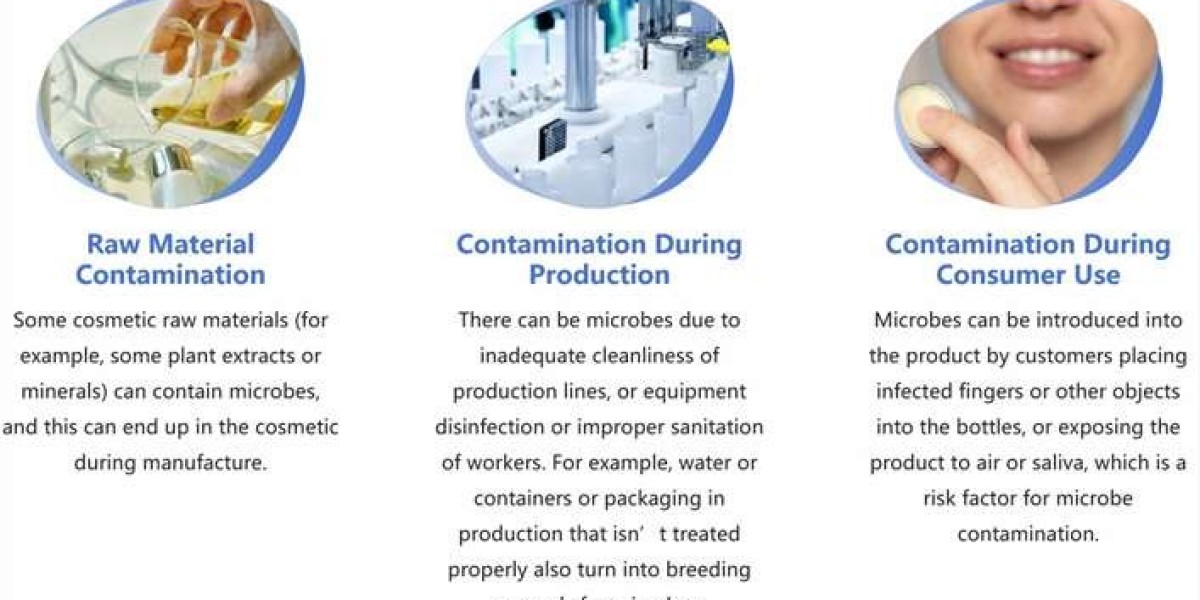
How Microorganisms Enter Cosmetics
To avoid microbial contamination, companies have to follow Good Manufacturing Practices (GMP), clean raw materials and manufacturing machinery, and add anti-microbial additives to stop microbes from growing.
How Is Microbial Analysis Conducted on Cosmetic Products?
Microbial testing is part of cosmetics quality control, with a focus on microbial safety and effectiveness in production as well as in final product. Microbiological analysis typically covers raw material, semi-finished products, finished goods and packaging.
General Process of Microbial Analysis
1. Sample Preparation: Samples are prepared from all the phases of production (raw materials, semi-finished products, finished goods) and packaging materials. Such samples can be liquids, creams, powders and other cosmetics.
2. Microbial Testing: There are different tests which can be performed such as culturing, PCR (Polymerase Chain Reaction) and immunological testing to identify and measure bacteria, molds, and yeasts in the cosmetics.
3. Data Analysis: These data are compared with standard to determine if the product is microbially safe. By way of illustration, according to ISO 15765, the number of total bacteria, and molds and yeasts in cosmetics should be within certain parameters.
4. Challenge Testing: Challenge testing is done before cosmetics go on the market, to check that the preservative system does a good job of keeping microbial contamination at bay. This process mimics the risk of product contamination due to microbes.
Types of Samples Tested in Microbial Analysis
1. Raw Materials: Some ingredients of cosmetics such as water, emulsifiers, fragrances may have microorganisms and will need to be tested before entering the factory.
2. Semi-finished Products: These are intermediate products, like ready-made creams or liquids. Microbial testing of semi-finished products provides sanitation in production.
3. Finished Products: Finished cosmetic products are then test for microbial contamination to ensure the safety of the consumer. Contamination of finished items is dangerous for skin infections or other illnesses.
4. Packaging Materials: Packaging material can be another cause of microbial contamination, so it needs to be tested to make sure that it does not contaminate the product.
Microbial detection is the core of cosmetic quality control. Ensure product safety and effectiveness by testing raw materials, semi-finished products, finished goods and packaging materials for microbial contamination to help manufacturers avoid microbial hazards. This procedure meets the global regulations and gives consumers safe and effective skincare and beauty care products.
What Are the Methods for Microbial Testing in Cosmetics?
Culturing and Identifying Microorganisms on Agar Plates
The traditional way of testing for microbial life would involve growing microbes on a solid substrate, like agar plates. The slurry is put onto nutrient-loaded agar plates and raised in a proper temperature and humidity. The microbes then enshrine themselves into colonies on the plate that are then detected by morphological, biochemical or serological analysis as species.
| Advantages | |
|---|---|
| High specificity | Effective for isolation and PCR detection of isolated pathogens. |
| Reliability and Accuracy | Assurance of reliability and accuracy with time. |
| Limitations | |
| Complex | Sample prep and result can take days to come back because microbes take time to develop. |
| Unusual growth for some fastidious microbes | Some hard-to-farm microbes don't grow as expected. |
Rapid Microbiological Methods
There are rapid microbial monitoring tools, such as ATP bioluminescence, flow cytometry and impedance microbiology. These are technologies that decrease detection times by measuring microbial metabolism or genes directly.
1. How These Methods Provide Faster Results than Traditional Culture Methods
Rapid methods greatly reduce the processing time of the samples and minimize the time in the culture process so faster the results can be obtained. PCR, for example, detects target pathogens within a few hours and avoids days of waiting.
2. Application in the Cosmetics Industry
Quick testing and testing methods are great for routine cosmetic testing and testing because it can be done quickly and will determine if there is a microbial contamination that could cause an issue within seconds and make the product safe and compliant.
Molecular-Based Methods
1. PCR, qPCR, and Gene Sequencing
Molecular methods detect and measure microbes by counting their DNA or RNA. PCR (Polymerase Chain Reaction) and qPCR (Quantitative PCR) are used to amplify specific sections of genes for microbes at low levels; gene sequencing yields the detailed microbiology.






