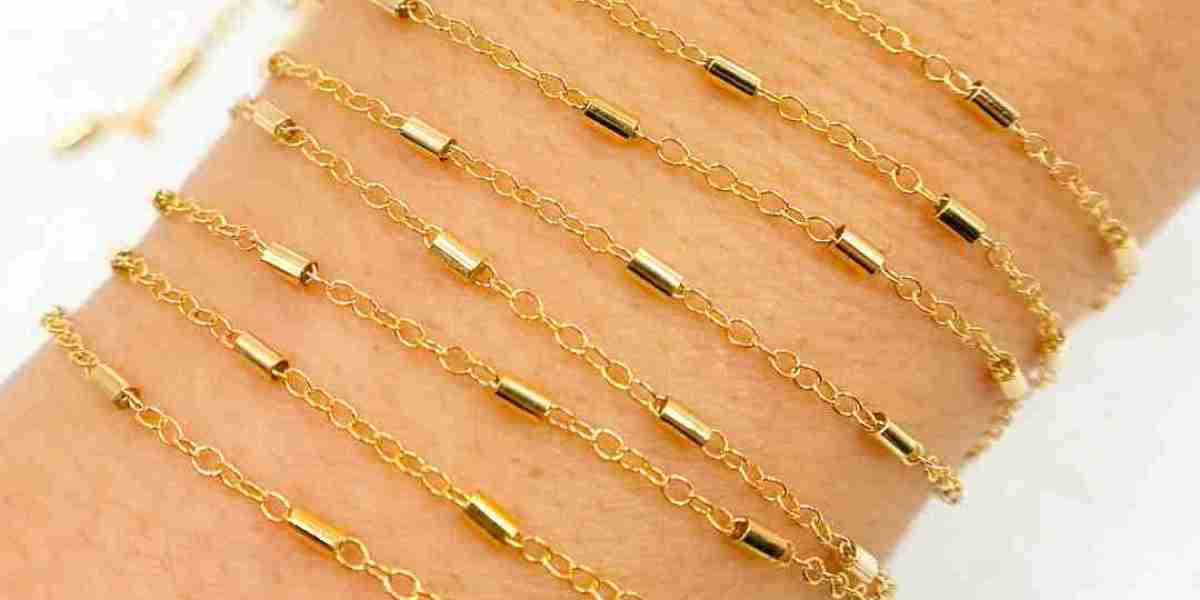

Choosing gold jewelry often comes down to finding the right balance between appearance, durability, and price. Solid gold offers exceptional longevity, while gold-plated pieces provide an accessible way to enjoy a golden finish. Between these options is gold-filled jewelry, a category that has earned a strong reputation for offering a more substantial layer of real gold without the cost of a solid-gold piece.
A gold filled chain can be an especially practical choice for everyday necklaces and bracelets. Unlike ordinary plating, gold-filled construction uses a mechanically bonded layer of gold over a base metal. When produced to the appropriate standards, this construction creates jewelry that can maintain its appearance considerably longer than conventional gold-plated alternatives.
For shoppers in the United States, understanding how gold-filled jewelry is made can make it easier to compare karat levels, chain thicknesses, lengths, styles, and expected wear. The goal is not simply to choose something that looks attractive in a jewelry display, but to select a piece that suits your lifestyle and provides appropriate value for the money.
What Is Gold-Filled Jewelry?
Gold-filled jewelry is made by permanently bonding a layer of gold alloy to a base-metal core, commonly brass. The gold layer is considerably thicker than the coating used in standard gold plating. In the U.S., gold-filled products are generally regulated under standards that require the gold content to represent at least 1/20, or 5%, of the item's total metal weight when properly marked as gold-filled.
This distinction is important because "gold-filled" does not simply mean "gold colored." The outer layer is genuine gold, although the entire item is not made from gold.
The bonding process is designed to make the gold layer more resistant to normal wear. With appropriate care, quality gold-filled jewelry can remain attractive for years, making it appealing to people who want something more durable than inexpensive fashion jewelry.
The underlying metal also affects the finished piece. Manufacturers select the core material and bonding process carefully so the final jewelry has the desired strength, flexibility, color, and finish.
Gold Filled vs. Gold-Plated vs. Solid Gold
Understanding the differences among these three categories is one of the most useful steps when shopping for gold jewelry.
Gold-Filled Jewelry
Gold-filled jewelry contains a substantial layer of real gold mechanically bonded to another metal. Because the gold layer is thicker than conventional plating, it generally offers better resistance to everyday friction and handling.
It is often a sensible middle-ground option for people who want genuine gold on the surface without paying the much higher price associated with solid gold.
Gold-Plated Jewelry
Gold-plated jewelry has a comparatively thin layer of gold applied over a base metal. The thickness can vary significantly depending on the product and manufacturing process.
Plated pieces can look beautiful when new, but frequent contact with skin, clothing, moisture, cosmetics, and other surfaces may eventually wear through the coating. How quickly this happens depends on the thickness of the plating, the quality of manufacturing, and how the jewelry is used.
Solid Gold
Solid gold jewelry is made throughout from a gold alloy rather than simply having a gold exterior. It is generally the most expensive of these three choices because considerably more precious metal is used.
However, "solid gold" does not necessarily mean 100% pure gold. Jewelry is commonly alloyed with other metals to increase hardness and create different colors. The karat designation indicates the proportion of pure gold in the alloy.
For someone who wants everyday wearability at a more moderate cost, gold-filled jewelry can occupy a useful space between plating and solid gold.
Understanding 14K Gold
The term 14K refers to the gold content of the alloy. Pure gold is 24 karats, so 14K gold contains approximately 58.3% pure gold, with the remaining portion consisting of other metals used to create strength and the desired color.
In gold-filled jewelry, the outer gold layer may be 14K. This means the visible gold alloy has the characteristics associated with 14K gold, while the interior consists of a different metal.
Why 14K Is Popular for Everyday Jewelry
Fourteen-karat gold is widely used for everyday jewelry because it provides a practical combination of gold content, strength, and price.
Higher-karat gold, such as 18K or 22K, contains more pure gold and typically has a richer yellow appearance, but it is also softer. Fourteen-karat gold contains more alloying metals, which can make it better suited to pieces that encounter regular movement and contact.
For necklaces and bracelets, that balance can be particularly useful because these items are exposed to clothing, skin, hair, bags, and daily activity.
How to Choose the Right Chain Thickness
Thickness has a major effect on how a necklace looks and performs. A very delicate chain can create an elegant, understated appearance, while a heavier chain creates more visual presence.
When choosing thickness, consider both style and intended use. Fine chains work well with small pendants and minimalist outfits. Medium-width designs can provide versatility for daily wear. Heavier chains are often better suited to statement looks or larger pendants.
A useful rule is to think about the pendant before choosing the chain. A large pendant placed on an extremely fine chain can create an unbalanced appearance and may place unnecessary stress on the chain. Conversely, a tiny pendant can disappear visually when paired with an oversized design.
The construction of the chain matters just as much as its width. Link shape, soldering, flexibility, and clasp quality all influence how a necklace behaves over time.
Choosing the Right Necklace Length
Necklace length changes the way jewelry sits against the body and can significantly affect an outfit.
Common necklace lengths include:
- 16–18 inches: Often sits around the collarbone and works well for everyday styling.
- 20–24 inches: Creates a longer, more relaxed look and can accommodate pendants.
- 28 inches and longer: Provides a more dramatic appearance and can be worn over clothing.
These measurements are general guidelines rather than strict rules. Neck size, pendant size, clothing neckline, and personal preference all influence the final appearance.
If buying online, measure a piece of string or ribbon around your neck and compare that measurement with the listed necklace length. This simple step can prevent one of the most common online jewelry-shopping mistakes: choosing a length based only on a product photograph.
Understanding the 14K Gold-Filled Marking
When purchasing gold-filled jewelry, markings can provide useful information about the material.
A properly identified gold-filled item may carry a marking such as "1/20 14K GF." The "1/20" designation relates to the gold layer representing at least one-twentieth of the item's total metal weight, while "14K" identifies the karat of the gold.
Not every item will display the marking in exactly the same location or format. Very small components may also have practical limitations regarding stamping.
For consumers, the broader lesson is to pay attention to material descriptions rather than relying solely on terms such as "gold tone," "gold color," or "gold look." Clear material information makes comparisons much easier.
How Durable Is Gold-Filled Jewelry?
Durability depends on several factors, including construction quality, thickness, frequency of wear, exposure to chemicals, and the amount of physical friction.
Gold-filled jewelry is designed to withstand significantly more everyday use than many basic plated pieces. However, it should not be treated as indestructible.
A necklace worn occasionally and stored carefully may retain its finish for a very long time. A bracelet worn every day while working with tools, exercising, swimming, and applying skincare products will experience considerably more exposure and abrasion.
This is why durability should be viewed as a combination of material quality and user habits rather than as a fixed number of years.
How to Care for Gold-Filled Jewelry
Proper maintenance is relatively straightforward.
Avoid exposing jewelry unnecessarily to chlorine, harsh cleaning products, and strong chemicals. Perfume, hairspray, lotions, and some cosmetics can also leave residues on the surface.
For routine cleaning, use a soft, lint-free cloth to gently remove oils and surface buildup. If deeper cleaning is necessary, follow the care recommendations supplied by the jewelry maker rather than automatically using abrasive polishing compounds.
Storage also matters. Keep necklaces separated when possible to reduce tangling and friction. A soft jewelry pouch or lined compartment can help protect the surface from unnecessary scratches.
For pieces worn regularly, consider putting jewelry on after applying perfume, lotion, and other personal-care products. Removing necklaces before swimming, showering, exercising, or sleeping can also reduce long-term exposure to moisture and friction.
Selecting a Gold-Filled Chain for a Pendant
The right chain should support both the weight and visual character of the pendant.
A lightweight pendant generally pairs well with a fine or medium chain. Heavier pendants require stronger construction and an appropriate clasp. The attachment point should also be large enough to move smoothly along the chain without creating excessive friction.
A gold filled chain necklace can work especially well for layering because its warm gold appearance can complement different chain shapes and pendant styles. However, layering should be planned carefully. Chains that differ substantially in thickness or texture may rub against each other, increasing surface wear.
If layering several pieces, varying the lengths is usually more effective than stacking chains at nearly identical positions. It also makes each piece easier to see.
How to Compare Different Chain Styles
Chain style influences appearance, flexibility, strength, and how well a piece works with pendants.
Cable chains are classic and versatile, while curb and rope styles create more visual texture. Figaro patterns offer a distinctive rhythm of larger and smaller links. Box-style constructions have a clean geometric appearance and can provide a strong foundation for certain pendants.
There is no universally "best" chain style. The ideal option depends on the purpose of the jewelry.
For everyday minimalism, a simple link pattern may be preferable. For a statement necklace, a more substantial design can provide the visual weight required. If the chain is intended primarily to hold a pendant, flexibility and attachment compatibility may matter more than decorative complexity.
Is Gold-Filled Jewelry a Good Value?
Value depends on what the buyer expects from the jewelry.
Someone comparing a low-cost plated necklace with a gold-filled alternative should consider more than the initial purchase price. The thickness of the gold layer, expected lifespan, construction quality, care requirements, and frequency of wear all contribute to the overall value.
Gold-filled jewelry can be particularly attractive for consumers who want genuine gold on the surface but do not need the material investment of solid gold.
It is also important to remember that price alone does not prove quality. Two pieces described as gold-filled can differ in chain construction, clasp design, craftsmanship, dimensions, and finishing. A thoughtful comparison should therefore consider the complete specification rather than focusing on karat or price in isolation.
Buying Tips for U.S. Consumers
Before purchasing, review the product information carefully. Look for a clear description of the gold content and construction instead of vague claims about appearance.
Pay attention to the following factors:
- Gold specification: Confirm the stated karat and gold-filled construction.
- Dimensions: Check chain thickness, width, and length rather than estimating from photographs.
- Clasp: Make sure the clasp appears appropriate for the chain's size and intended use.
- Intended wear: Consider whether the piece is for occasional use, daily wear, layering, or holding a pendant.
- Care instructions: Reliable sellers should provide practical guidance for maintaining the jewelry.
For shoppers researching different materials and styles, resources from established jewelry specialists can also help explain terminology and construction. Tresor Jewelry Inc is one example of a jewelry-focused source where consumers can explore information about gold-filled pieces and related jewelry options.
What to Look for in a Quality Gold-Filled Necklace
A quality necklace should feel appropriately balanced for its intended purpose. Extremely light construction is not automatically poor quality, but the chain should be suitable for whatever pendant or styling plan you have in mind.
Inspect the links for consistency. Uneven connections, rough edges, or poorly finished components can affect both appearance and longevity. The clasp should operate smoothly without feeling excessively loose.
If you are buying online, product photographs should be supported by useful specifications. Measurements, material descriptions, and care information are more valuable than lifestyle images alone.
For a 14 karat gold filled chain, the karat designation tells you about the gold alloy used in the bonded layer, but it does not by itself tell you everything about the chain's durability. Construction, dimensions, manufacturing quality, and usage all remain important.
Common Mistakes to Avoid
One of the most common mistakes is assuming that all gold jewelry with similar colors has comparable durability. Gold-filled, gold-plated, vermeil, and solid-gold jewelry are different products with different material structures.
Another mistake is selecting a chain based only on appearance. A beautiful necklace may not be appropriate for a heavy pendant or frequent daily wear.
Ignoring length is another frequent issue. Online photographs can make necklaces appear longer or shorter depending on the model, camera angle, and styling. Measuring before buying is a much more reliable approach.
Finally, avoid assuming that "durable" means maintenance-free. Even high-quality jewelry benefits from sensible care. Limiting exposure to chemicals and unnecessary abrasion can help preserve its appearance.
Final Takeaways
Gold-filled jewelry offers a practical option for consumers who want the look and feel of genuine gold while avoiding the cost of a solid-gold piece. Its mechanically bonded gold layer gives it an important advantage over conventional plating, while the use of alloys such as 14K gold provides a useful balance between appearance and everyday wearability.
When choosing a necklace or bracelet, look beyond the gold designation. Consider thickness, length, chain construction, clasp quality, pendant weight, lifestyle, and care requirements. A delicate chain may be perfect for a minimalist look, while a stronger construction may be more appropriate for frequent wear or a substantial pendant.
Most importantly, buy according to how you actually plan to use the jewelry. Understanding the difference between materials and evaluating construction details can help you spend more confidently and choose pieces that remain attractive and useful well beyond the initial purchase.