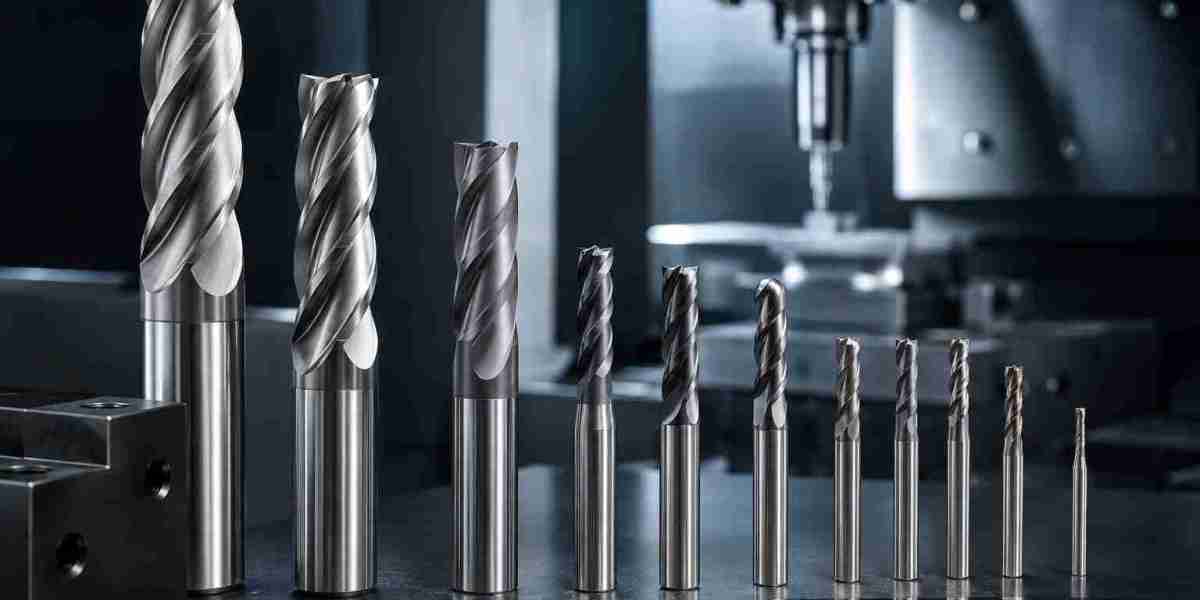

Understanding the differences between carbide and HSS cutting tools can help machinists and manufacturing professionals choose the right solution for their material, machine, production requirements, and budget.
What Are Carbide Cutting Tools?
Carbide cutting tools are manufactured using a hard carbide material, typically combined with a binder to create a cutting tool capable of handling demanding machining conditions. Carbide is known for its high hardness, wear resistance, and ability to maintain cutting performance at elevated temperatures.
These characteristics make carbide tools suitable for applications that require higher cutting speeds and productivity. Carbide end mills, drills, inserts, and other CNC cutting tools are commonly used for precision machining and high-production environments.
Because carbide is rigid and highly wear resistant, it can provide excellent dimensional consistency when used with the appropriate machine setup and cutting parameters.
What Are HSS Cutting Tools?
High-speed steel is an alloyed tool steel designed to maintain hardness and cutting ability at higher temperatures than conventional carbon tool steels. HSS has been used extensively for drilling, milling, tapping, reaming, and other machining operations.
One of the major advantages of HSS is its toughness. Compared with carbide, HSS can be more forgiving in applications where vibration, interrupted cuts, or less rigid machine setups are present.
HSS tools can also be resharpened, which can provide additional value for certain machining operations. When cutting conditions do not require the higher speeds associated with carbide, HSS can be a practical choice.
Carbide vs. HSS: Key Differences
The most important differences between carbide and HSS involve hardness, cutting speed, toughness, heat resistance, and cost.
Cutting Speed
Carbide generally supports higher cutting speeds than HSS. Its ability to maintain hardness at elevated temperatures allows machining operations to run faster when the machine and application are capable of supporting those conditions.
HSS typically requires lower cutting speeds. This can make it more suitable for applications where production speed is less critical or where the machine has limited spindle capabilities.
Tool Life
Carbide can provide longer tool life in many high-speed and high-production applications. Its hardness and wear resistance allow it to maintain a sharp cutting edge under demanding conditions.
HSS can also provide reliable tool life when used within appropriate operating parameters. However, excessive heat and cutting speeds can accelerate wear.
Tool life ultimately depends on several factors, including workpiece material, cutting parameters, coolant, machine rigidity, tool geometry, and application.
Toughness
HSS has an advantage when toughness is a major consideration. Its ability to absorb shock makes it useful for interrupted cuts and applications where the machining setup may experience vibration.
Carbide is harder but generally more brittle. A rigid machine setup and stable workholding are therefore particularly important when using carbide tools.
Heat Resistance
Carbide performs well at higher temperatures and can maintain its hardness during demanding machining operations. This makes it well suited to applications where high cutting speeds generate significant heat.
HSS has lower hot hardness compared with carbide, so cutting speeds generally need to be controlled to prevent excessive heat and premature tool wear.
When Should You Choose Carbide?
Carbide is often the preferred choice when productivity, precision, and wear resistance are priorities.
Consider carbide when:
● You need higher cutting speeds
● Production volume is high
● Tool life is a major concern
● The machine provides sufficient rigidity
● Consistent dimensional accuracy is required
● You are machining hard or abrasive materials
● The application benefits from increased material removal rates
Carbide can be particularly valuable in production environments where reducing cycle time and minimizing tool changes can have a direct impact on operating costs.
At Cutting Tool Solutions, carbide cutting tools can be selected according to the specific requirements of different machining applications. Choosing the correct geometry, diameter, flute configuration, and coating is just as important as selecting carbide as the tool material.
When Should You Choose HSS?
HSS may be the better choice when toughness, flexibility, and cost are more important than maximum cutting speed.
Consider HSS when:
● The machine setup is less rigid
● Interrupted cutting is involved
● Cutting speeds are relatively low
● Tool resharpening is desirable
● Production volumes are moderate
● Initial tooling cost needs to be controlled
● The application does not require carbide's higher speed capability
HSS can also be useful for certain general-purpose drilling, tapping, milling, and reaming applications.
Consider the Workpiece Material
The material being machined should always influence your tooling decision. Aluminum, mild steel, stainless steel, hardened materials, plastics, and other workpieces have different cutting characteristics.
For softer materials, the tool geometry and chip evacuation may be more important than simply choosing carbide or HSS. Harder and more abrasive materials may benefit from carbide's wear resistance and heat-handling capabilities.
The correct decision should therefore consider the complete machining application rather than treating carbide or HSS as universally superior. Along with cutting performance, accurate inspection using equipment such as Mitutoyo micrometer sets can help verify finished dimensions and maintain quality standards.
Consider Your Production Requirements
Production volume can also determine which tool material makes the most sense.
For high-volume manufacturing, the additional performance and tool life offered by carbide may justify the higher initial tooling investment. Faster cutting speeds and fewer tool changes can help improve productivity over an extended production run.
For low-volume or occasional machining, HSS may provide sufficient performance without requiring the same tooling investment.
Accurate measurement can also play an important role in production control. Mitutoyo micrometer sets provide machinists with a practical way to measure a range of dimensions using appropriately sized precision instruments, helping support consistent inspection practices.
This same principle of matching materials to production requirements can apply across manufacturing industries. For example, businesses producing apparel products such as American flag men shorts or shorts with embroidery may prioritize different equipment and production considerations than a CNC machining operation. The key is always selecting tools and equipment according to the demands of the specific process.
Carbide or HSS: Which Is Better?
There is no single answer because the better option depends on the machining application.
Carbide is generally the stronger choice when high cutting speeds, productivity, wear resistance, and precision are priorities. HSS can be more appropriate when toughness, flexibility, lower tooling costs, or less rigid machining conditions are important.
The machine, material, cutting operation, production volume, and desired tool life should all be evaluated before making a decision. The same attention to application requirements should extend to inspection equipment, including Mitutoyo micrometer sets, when dimensional accuracy is critical.
Final Thoughts
Choosing between carbide and HSS cutting tools is ultimately about finding the right balance between performance, durability, machine capability, and cost. Carbide can deliver excellent performance in demanding, high-speed applications, while HSS remains a dependable option for applications where toughness and versatility are more important.
At Cutting Tool Solutions, selecting the appropriate cutting tool starts with understanding the machining application. Consider the workpiece material, machine rigidity, cutting parameters, production volume, and required tool life before choosing your tooling.
With the right tool material and proper machining parameters, manufacturers can improve cutting performance, reduce unnecessary downtime, and achieve more consistent results. Whether carbide or HSS is the better choice, application-specific CNC cutting tools selection remains the key to efficient and reliable machining.