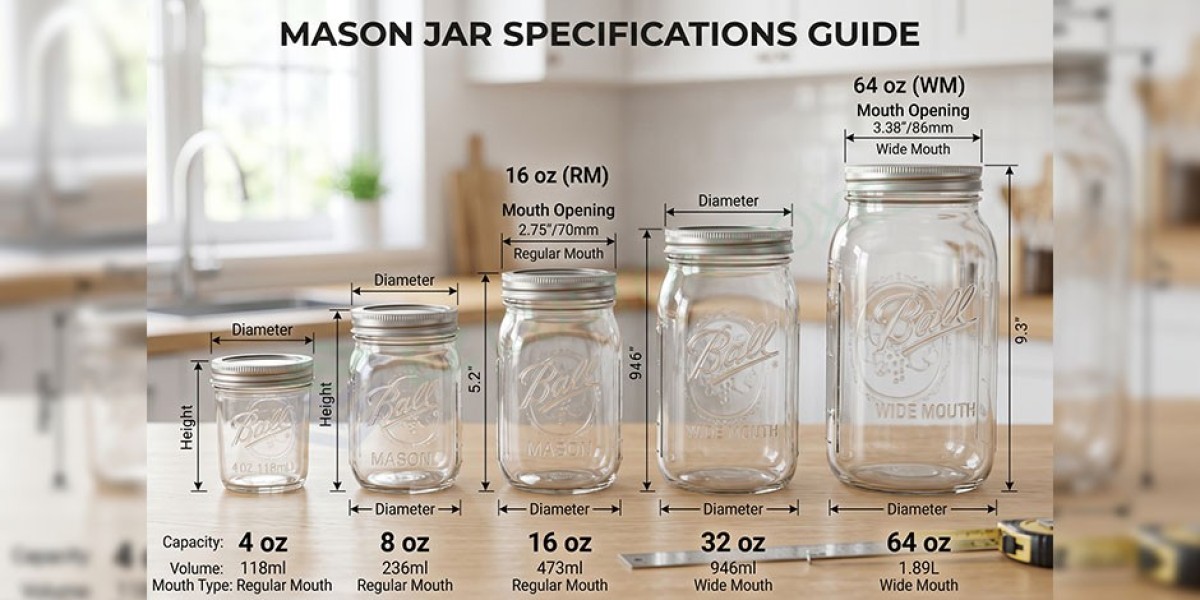

Mason jars are among the most versatile containers used for food preservation, storage, crafting, and home organization. But before choosing the right jar, it's important to understand Mason jar specifications, including size, capacity, dimensions, and mouth type.
Whether you're canning fruits, storing pantry staples, or creating DIY projects, knowing Mason jar specifications helps ensure you select the best option for your needs.
What Are Standard Mason Jar Specifications?
Standard Mason jar specifications include:
- Capacities ranging from 4 oz to 64 oz
- Regular-mouth and wide-mouth openings
- Glass construction designed for food storage and canning
- Standardized lid sizes for compatibility
- Various heights and diameters depending on capacity
Most Mason jars are available in sizes from 4 ounces (118 ml) to 64 ounces (1.9 liters).
Mason Jar Size Chart: Standard Dimensions and Capacity
The following chart outlines common Mason jar sizes and specifications.
| Capacity | Approximate Height | Mouth Type |
|---|---|---|
| 4 oz | 2.5 inches | Regular |
| 8 oz | 4 inches | Regular/Wide |
| 12 oz | 4.75 inches | Regular |
| 16 oz (Pint) | 5 inches | Regular/Wide |
| 24 oz | 6.75 inches | Wide |
| 32 oz (Quart) | 6.9 inches | Regular/Wide |
| 64 oz (Half-Gallon) | 9.5 inches | Wide |
Dimensions may vary slightly by manufacturer.
How Are Mason Jar Sizes Measured?
Mason jar capacity is measured by volume.
Common Measurement Units
- Ounces (oz)
- Milliliters (ml)
- Liters (L)
For example:
- 16 oz Mason jars = 1 pint
- 32 oz Mason jars = 1 quart
- 64 oz Mason jars = ½ gallon
Understanding these measurements helps ensure proper food storage and canning results.
Why Do Mason Jars Come in Different Sizes?
Different applications require different capacities.
Small Mason Jars (4–8 oz)
Ideal for:
- Jams
- Jellies
- Sauces
- Party favors
Medium Mason Jars (16 oz)
Perfect for:
- Overnight oats
- Dry ingredients
- Meal prep
Large Mason Jars (32–64 oz)
Best for:
- Bulk food storage
- Fermentation
- Large-batch canning
Choosing the correct size improves storage efficiency and reduces waste.
Regular-Mouth vs. Wide-Mouth Mason Jar Specifications
One of the most important Mason jar specifications is the mouth opening.
Regular-Mouth Mason Jars
Typically feature:
- Smaller opening
- Easier pouring
- Suitable for liquids and preserves
Wide-Mouth Mason Jars
Typically feature:
- Larger opening
- Easier filling and cleaning
- Better for whole fruits and vegetables
Why Does Mouth Size Matter?
A wider opening allows easier access and makes food preparation more convenient.
Standard Mason Jar Lid Specifications
Most Mason jars use a two-piece lid system.
Components Include
- Flat sealing lid
- Screw-on metal band
Common lid diameters include:
- Regular mouth: approximately 70 mm
- Wide mouth: approximately 86 mm
These standard sizes allow compatibility across many Mason jar brands.
How to Choose the Right Mason Jar Size
When selecting a Mason jar, consider:
1. Intended Use
Ask yourself:
- Will you be canning food?
- Storing dry goods?
- Using it for crafts?
2. Storage Space
Larger jars require more shelf space.
3. Food Type
Different foods fit better in specific jar sizes.
4. Mouth Opening
Wide-mouth jars simplify filling and cleaning.
Why Mason Jar Specifications Matter
Understanding Mason jar specifications offers several benefits:
- Ensures proper food preservation
- Improves storage efficiency
- Helps with recipe planning
- Supports safe canning practices
- Simplifies lid and accessory selection
Using the correct jar size can significantly improve convenience and organization.
Common Materials Used in Mason Jars
Most Mason jars are made from:
Tempered Glass
Benefits include:
- Durable construction
- Heat resistance
- Food-safe storage
Metal Lids
Typically made from coated steel designed to create airtight seals.
These materials make Mason jars suitable for long-term storage and preservation.
Frequently Asked Questions
What are standard Mason jar specifications?
Standard Mason jar specifications include capacity, dimensions, mouth size, lid compatibility, and glass construction. Common capacities range from 4 oz to 64 oz.
What is the most common Mason jar size?
The 16 oz (pint) and 32 oz (quart) Mason jars are among the most commonly used sizes.
How do you measure a Mason jar?
Mason jars are measured by their liquid capacity, usually expressed in ounces, milliliters, pints, or quarts.
What is the difference between regular-mouth and wide-mouth Mason jars?
Regular-mouth jars have a smaller opening, while wide-mouth jars have a larger opening that simplifies filling and cleaning.
Are Mason jar lids universal?
Most Mason jar lids follow standard regular-mouth or wide-mouth sizing, making them compatible across many brands.
Which Mason jar size is best for canning?
The ideal size depends on the food being preserved. Pint and quart jars are commonly used for home canning.
Final Takeaway
Understanding standard Mason jar sizes helps you choose the right jar for food preservation, storage, meal prep, and DIY projects. By considering capacity, dimensions, mouth size, and lid compatibility, you can find the perfect Mason jar for your specific needs.
Before purchasing, compare jar sizes and intended uses to ensure maximum convenience, efficiency, and storage performance.







