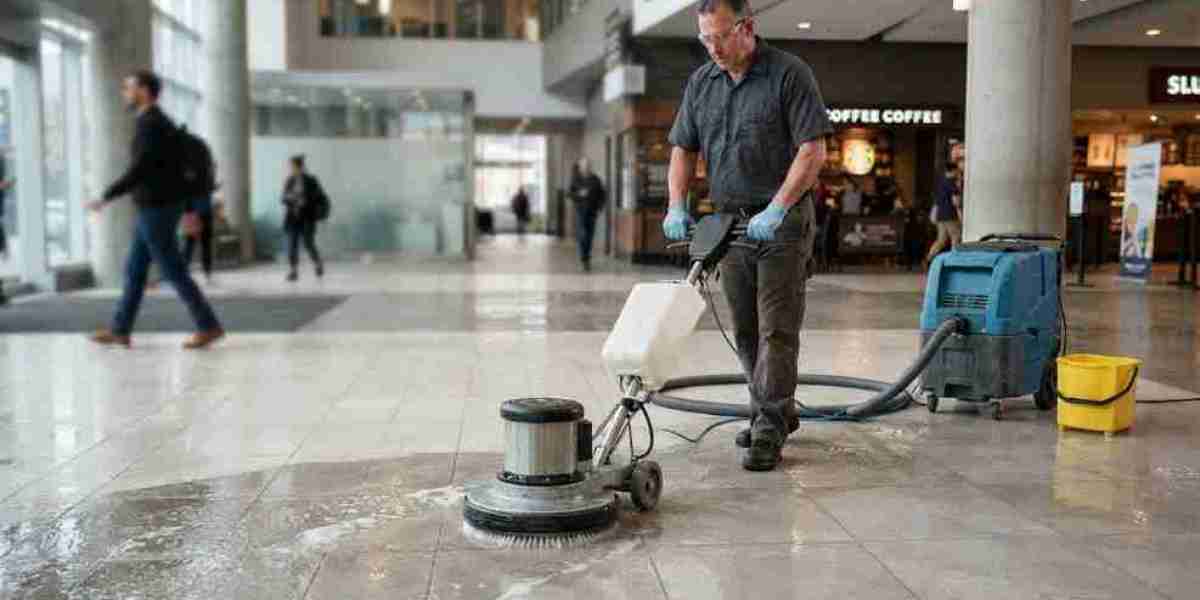

Busy commercial floors deal with a constant stream of shoes, carts, spills, dust, and outdoor debris. A floor can look clean in the morning and already show footprints, dull spots, or dirty grout by the afternoon. Keeping it presentable takes more than simply running a mop across it every day.
The biggest challenge is that daily cleaning often removes surface dirt while leaving behind the material that builds up gradually. Fine soil can settle into grout, grease can create a thin film, and moisture can carry dirt into areas that are difficult to reach with routine equipment.
A good maintenance routine focuses on preventing buildup before it becomes obvious. That means paying attention to entrances, busy walkways, spills, grout lines, and the cleaning products being used throughout the week.
Give Entry Areas Extra Attention
The entrance is usually where a commercial floor starts collecting trouble. Shoes bring in dust, sand, moisture, salt, and other outdoor material that can spread through a building within minutes. During wet or snowy weather, the amount of tracked-in material can increase dramatically.
Use quality entry mats and keep them clean rather than treating them as a permanent dirt trap. When mats become overloaded, they stop removing as much soil from footwear. Keeping the entrance dry also reduces the chance of muddy footprints being spread across the rest of the floor.
Clean High-Traffic Paths More Often
Not every section of a commercial floor needs the same amount of attention. Main walkways, checkout areas, reception spaces, hallways, and entrances usually collect far more soil than corners or low-use rooms.
Focus routine cleaning on these paths instead of treating the entire floor exactly the same way. This keeps the areas customers actually see looking better while reducing unnecessary wear from excessive cleaning.
Don't Let Grout Become the Weak Spot
Tile itself can often be wiped clean fairly easily, but grout is a different story. Its textured surface can hold fine dirt, oils, and moisture, allowing dark lines to develop even when the surrounding tile looks reasonably clean.
Once grout becomes heavily soiled, routine mopping may not be enough to restore its appearance. The dirt can become packed into the surface over time, especially in entrances, food-service areas, restrooms, and other busy spaces.
Regular attention to grout keeps the entire floor looking cleaner. When grout lines are maintained before they become heavily discolored, the floor generally requires less aggressive cleaning later.
Remove Spills Before Foot Traffic Works Them In
A spill becomes a much bigger problem when dozens of people walk through it. Liquids can spread across a larger section of tile, while food, grease, and dirt can combine into a sticky layer that is harder to remove.
Clean spills as soon as they are noticed, particularly in restaurants, break rooms, retail spaces, and other areas where food or drinks are common. Use suitable cleaning materials for the surface and avoid leaving excessive moisture behind.
Fast response also matters for safety. A wet or greasy commercial floor isn't just unattractive; it can become a slipping hazard for employees, customers, and visitors.
Use the Right Cleaning Method for the Floor
A tile floor can be damaged or left looking worse when the wrong cleaning product or equipment is used repeatedly. Some products may leave residue, while overly aggressive methods can affect grout or certain tile finishes.
Follow the care requirements for the specific tile and grout material installed in the building. Avoid assuming that a stronger chemical will automatically produce a cleaner floor. The right method is usually the one that removes the soil effectively without creating a new surface problem.
For facilities that are dealing with years of buildup rather than ordinary daily dirt, commercial tile cleaning can provide a deeper reset before the regular maintenance routine begins again. A thorough cleaning can remove material that routine mopping has gradually left behind.
Watch for the Film That Mopping Can Leave Behind
A tile floor can feel sticky even though it has been cleaned recently. This often happens when cleaning solution or dissolved soil isn't fully removed from the surface. As layers build up, the floor may look cloudy or dull instead of clean and clear.
If a floor repeatedly develops this film, changing the cleaning process may be more useful than simply mopping more often. Using the correct amount of cleaner and removing leftover residue can help the tile maintain a cleaner appearance.
This is especially important in large facilities where a small amount of residue is repeated over hundreds of square feet. Small cleaning mistakes can become very noticeable when they happen every day.
Keep Restrooms and Food Areas on a Different Routine
High-use restrooms and food preparation or serving areas tend to produce different types of soil than office hallways. Restrooms deal with moisture, soap residue, and heavy foot traffic, while food areas may have grease, crumbs, drinks, and organic material.
These areas should be checked more frequently rather than relying on one building-wide cleaning schedule. Paying attention to the type of soil present helps determine what cleaning approach is actually needed.
A targeted routine also makes it easier to notice problems early. Dark grout, greasy patches, unusual odors, and recurring residue are easier to manage when someone is regularly watching for them.
Schedule Deep Cleaning Before the Floor Looks Neglected
Waiting until tile floors look severely dirty can make maintenance more difficult. By that point, soil may have become deeply embedded in grout and residue may have accumulated across large areas.
A periodic deep cleaning gives the daily maintenance routine a cleaner surface to work with. After buildup is removed, regular sweeping and mopping can do a better job of maintaining the appearance because there is less old soil underneath.
The ideal schedule depends on foot traffic, building use, weather, and the type of business. A medical office, restaurant, warehouse showroom, and retail store can all have very different flooring needs.
Train Staff to Notice Small Floor Problems
Clean floors are easier to maintain when employees know what to look for. A staff member who notices a spill, dark grout line, sticky patch, or tracked-in mud early can prevent a small issue from becoming a visible floor problem.
Make routine checks part of normal building care instead of waiting for someone to complain. Simple observations throughout the day can catch problems that an evening cleaning crew might otherwise have to spend more time correcting.
This also helps keep cleaning consistent across the building. When everyone understands which areas need faster attention, high-traffic floors are less likely to fall into a cycle of repeated buildup.
Protect the Floor Between Deep Cleanings
Daily habits determine how long a commercial floor stays presentable after a thorough cleaning. Keep entrances maintained, remove spills quickly, vacuum or sweep loose debris before mopping, and avoid applying more cleaning product than the surface requires.
It also helps to address damaged grout or loose tile promptly. Small surface problems can collect more dirt and moisture, making the surrounding floor harder to keep clean. Fixing them early protects both the appearance and the long-term condition of the flooring.
A clean commercial floor isn't created by one cleaning session. It comes from combining sensible daily maintenance with deeper cleaning when ordinary routines can no longer remove the buildup.
Conclusion
Maintaining tile floors in a high-traffic business is mainly about controlling buildup before it becomes difficult to remove. Entrances, grout lines, busy walkways, restrooms, and food areas deserve more attention because they experience more dirt and moisture than quieter parts of the building.
Quick spill response, proper cleaning products, regular sweeping, and periodic deep cleaning can keep the floor looking cleaner for longer. Just as importantly, these habits reduce the chance of sticky residue, dark grout, and heavy soil becoming permanent-looking problems.
One useful term to understand is porosity, because it describes how much empty space a material contains and helps explain why some tile and grout surfaces can absorb or retain moisture and contaminants more readily than others.
Related Article: How to Deal With Fresh Pet Accidents Before They Set