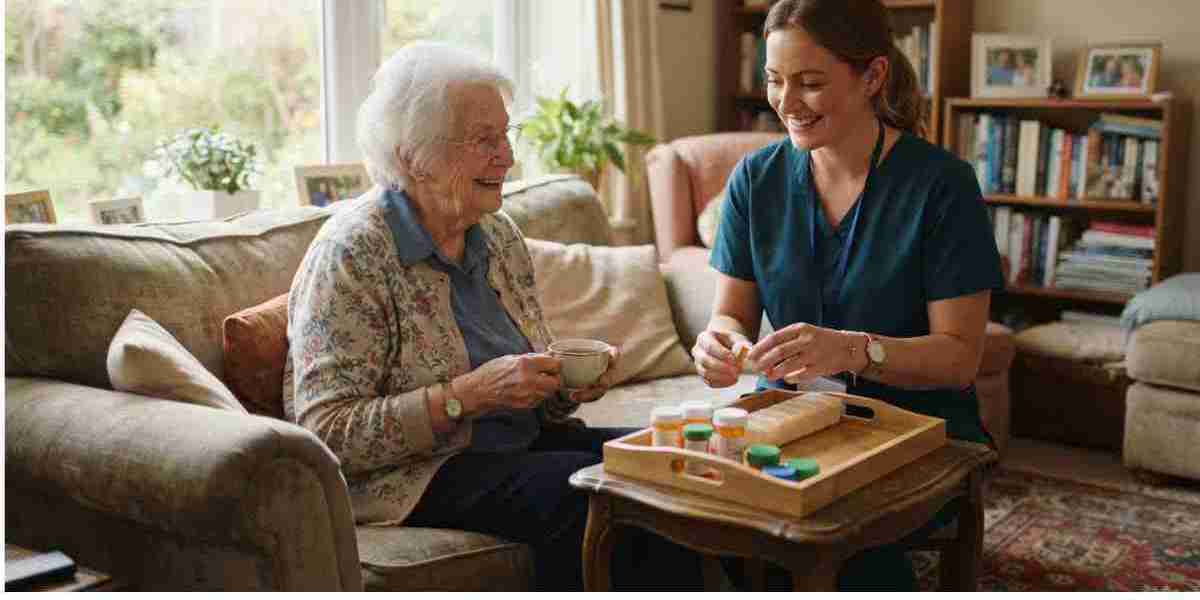

Home care for elderly parents usually includes a combination of personal assistance, medical support, companionship, household help, appointment coordination, emergency assistance, and help with everyday responsibilities. The exact support depends on the parent’s health, mobility, routine, and level of independence.
For some families, care may mean regular visits and help with medicines or doctor appointments. For others, it may involve nursing support, post hospital care, companionship, bill payments, home maintenance, or emergency coordination.
The important point is that elderly care at home is not limited to medical needs. Good care considers how an older person manages daily life, stays socially connected, and remains comfortable and safe in familiar surroundings.
What Is Usually Included in Home Care for Elderly Parents?
The services provided can vary from one family to another. A practical care plan generally covers the areas where an older parent needs regular assistance.
1. Medical and Nursing Support
Health related support is often one of the main reasons families arrange professional home care.
Older adults may need assistance with routine health checks, medication schedules, recovery after surgery, or ongoing medical conditions. Depending on the situation, care may involve trained nurses, medical attendants, doctor consultations, and support with follow up appointments.
Pranyaas provides medical and nursing assistance that can include tele consultations, medication management, post surgical recovery support, and coordination for medical requirements at home.
This type of support can be particularly useful when travelling to a hospital regularly is difficult for an elderly person.
2. Help With Doctor Appointments
A doctor’s appointment can involve much more than reaching the clinic.
An elderly parent may need help scheduling the appointment, arranging transport, keeping track of medical instructions, collecting reports, or communicating the doctor’s recommendations to family members.
Professional caregivers or care managers can assist with these practical responsibilities. This becomes particularly valuable when children live in another city or country and cannot accompany their parents to every appointment.
3. Medication and Health Routine Support
Medication management can become difficult when a person takes several medicines at different times of the day.
Home support may include reminders, keeping medicines organised, coordinating refills, and monitoring whether prescribed routines are being followed. Care providers can also communicate relevant observations to family members when changes in a parent’s condition need attention.
Medication support should always follow the instructions given by the treating doctor. Care staff should not independently change doses or treatment plans.
4. Personal Assistance With Daily Activities
Some elderly parents remain highly independent but need occasional help with everyday activities.
This can include assistance with:
• Moving safely around the house
• Getting ready for the day
• Meal related support
• Basic household activities
• Accompanying parents outside the home
• Managing routine appointments
The level of assistance should match the parent’s actual needs. Providing unnecessary help can sometimes make an independent person feel less capable, so the goal should be to support daily living without taking away personal choice.
Why Companionship Is Also Part of Elder Care
Physical assistance is only one part of ageing at home. Social isolation can also affect an older person’s daily wellbeing, particularly when children have moved away or when a spouse is no longer present.
Companion care can involve regular conversations, spending time together, helping with hobbies, accompanying a parent during outings, or simply having someone available during the day.
Pranyaas includes companion care as part of its parent care services, with support focused on social interaction, conversation, hobbies, and meaningful daily activities.
This can make a difference for parents who do not necessarily require constant medical attention but still benefit from regular human contact.
Home Maintenance and Household Assistance
An elderly parent may be capable of managing most household activities but struggle with tasks that require physical effort or technical work.
Changing a bulb, fixing a leaking tap, arranging electrical repairs, cleaning the house, or coordinating maintenance workers can become difficult or unsafe.
Home care may therefore extend beyond direct personal assistance. Pranyaas also lists support for household maintenance, including coordination with plumbers, electricians, carpenters, cleaning services, and home security installations.
This type of assistance is particularly useful for families who live away from their parents and cannot arrange local help whenever something goes wrong at home.
Emergency Assistance and Hospital Coordination
Families also need to consider what happens when an unexpected situation occurs.
A parent may suddenly feel unwell, fall at home, require urgent medical attention, or need hospital admission. Having a clear emergency contact and response process can reduce confusion during such situations.
Professional elder care services may help coordinate emergency assistance, transportation, hospital admission, communication with family members, and other immediate arrangements.
For families living outside the city or abroad, this local support can be especially important because they may not be able to reach their parents quickly.
Help With Bills and Everyday Expenses
Financial administration is another area that can become difficult with age.
Parents may need assistance with utility bills, monthly payments, service appointments, or other routine transactions. While financial decisions should remain under the parent’s control wherever possible, practical assistance can reduce the burden of remembering multiple deadlines.
Pranyaas also offers payment and expense management assistance for routine household bills and monthly dues.
Families should establish clear boundaries around financial assistance, maintain records, and protect the parent’s privacy.
Support for Families Living in Another City or Country
One of the biggest practical challenges in elderly care is distance.
A son or daughter may speak with their parents every day but still be unable to help when a doctor’s visit, household repair, or emergency occurs. This is where structured home care can provide local support while keeping family members informed.
A useful arrangement should have a clear point of contact, defined responsibilities, regular updates, and a process for handling urgent situations.
Pranyaas describes a care model that includes a dedicated Care Counselor, personalised care teams, and regular communication with families.
For families considering home care for elderly parents, these communication arrangements are worth discussing before services begin.
How to Decide What Your Parent Actually Needs
Not every elderly parent requires the same level of care. Before arranging services, families should assess the parent’s normal routine rather than assuming that age alone determines their needs.
Consider questions such as:
• Can they manage bathing, dressing, and meals independently?
• Are medicines being taken correctly?
• Can they attend medical appointments without assistance?
• Are there mobility or fall related concerns?
• Do they spend most of the day alone?
• Can they manage household repairs and bills?
• Who will respond if there is an emergency?
• How often does a family member visit in person?
The answers can help families decide whether they need occasional assistance, regular companion care, nursing support, or a broader care arrangement.
What Families Should Look for in a Home Care Provider
When comparing providers, families should look beyond the number of services listed on a website.
Ask who will actually visit the parent, how caregivers are selected, how medical situations are handled, who the family contacts during an emergency, and how updates are shared.
It is also worth asking whether the care plan can change as the parent’s needs change. An older adult may need only companionship today but require nursing or post hospital assistance later.
Good communication, clear responsibilities, trained personnel, and respect for the parent’s independence are practical signs of a well managed care arrangement.
Conclusion
Home care for elderly parents can cover far more than basic assistance at home. Depending on individual needs, it may include medical and nursing support, medication assistance, companionship, appointment coordination, emergency help, household maintenance, bill management, and regular communication with family members.
The right arrangement should be based on what the parent actually needs rather than a standard package of services. Families should assess health, mobility, independence, social needs, household responsibilities, and emergency requirements before deciding on the level of support.
For families managing elder care from a distance, a reliable local care team can also make everyday responsibilities easier to coordinate while allowing parents to continue living in familiar surroundings.
FAQs
Q.1 What does home care for elderly parents usually include?
It can include personal assistance, nursing support, medication reminders, companionship, doctor appointment coordination, emergency assistance, household help, and support with routine expenses.
Q.2 Is home care only needed for elderly parents with medical conditions?
No. An older person may need companionship, household assistance, help with appointments, or support with daily activities even when there is no major medical condition.
Q.3 Can elderly parents receive nursing care at home?
Yes. Depending on their medical requirements, trained nurses or medical attendants may provide support at home, including recovery assistance and medication related care.
Q.4 How can families living abroad support elderly parents in India?
Families can arrange local care support, establish an emergency contact process, coordinate medical appointments, and receive regular updates about their parents’ wellbeing.
Q.5 Does home care include companionship?
Yes. Companion care can include conversations, hobbies, social activities, outings, and regular human interaction, depending on the parent’s preferences and care plan.
Q.6 How do I choose the right level of care?
Start by assessing the parent’s health, mobility, daily routine, social needs, medication requirements, household responsibilities, and ability to respond during emergencies. The care plan can then be based on those specific needs.








