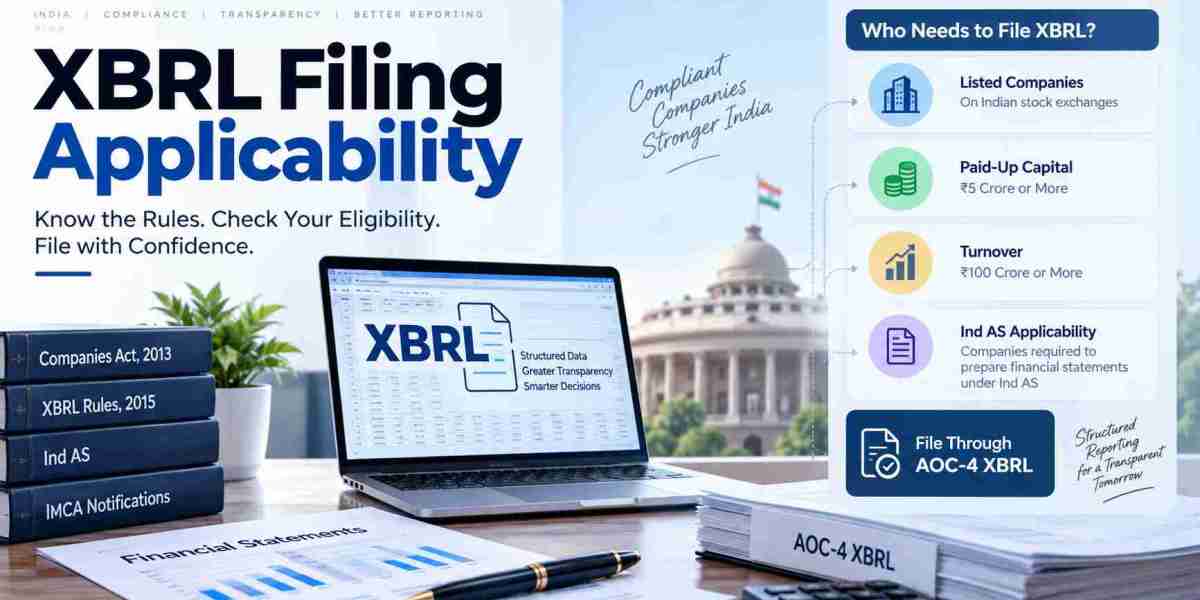

XBRL Filing Applicability in India: Who Needs to File?
XBRL filing applies to specific classes of companies in India rather than every company. XBRL Filing Applicability depends on factors such as listing status, paid-up capital, turnover, applicable Ind AS requirements and exemptions under the relevant rules. Understanding these criteria helps companies determine whether they need to file financial statements through e-Form AOC-4 XBRL.
For companies covered by the requirement, XBRL Filing Software can support financial data preparation, taxonomy mapping, tagging, validation and XBRL instance document generation.
What Is XBRL Filing?
XBRL stands for Extensible Business Reporting Language. It is a structured reporting language that associates financial information with standardized concepts and tags under an applicable taxonomy.
XBRL filing involves more than converting a financial statement into another file format. Financial information needs to be mapped and tagged according to the applicable taxonomy and the resulting XBRL instance document needs to be validated before filing.
XBRL Filing Applicability in India
Rule 3 of the Companies (Filing of Documents and Forms in Extensible Business Reporting Language) Rules, 2015 specifies the classes of companies required to file financial statements and other applicable documents in e-Form AOC-4 XBRL.
The main applicability criteria can be summarized as follows:
| Category | XBRL Applicability |
|---|---|
| Listed companies | Companies listed on stock exchanges in India |
| Indian subsidiaries | Indian subsidiaries covered under the applicable listed-company provision |
| Paid-up capital | ₹5 crore or more |
| Turnover | ₹100 crore or more |
| Ind AS | Companies required to prepare financial statements under the applicable Ind AS Rules |
These criteria need to be considered together with the exemptions and continuing-filing provisions under the applicable rules.
Which Companies Are Exempt?
The XBRL rules provide exemptions for certain categories of companies. These include:
- Non-banking financial companies
- Housing finance companies
- Companies engaged in banking
- Companies engaged in insurance
These exemptions relate to filing financial statements under the specified XBRL rules. Other statutory or regulatory reporting requirements may apply separately.
Does XBRL Filing Continue in Later Years?
XBRL filing can continue even when a company no longer meets one of the specified criteria.
Companies that have filed their financial statements under the applicable XBRL rules are required to continue filing in subsequent years, even if they no longer fall within the specified class.
Therefore, previous XBRL filing history should also be reviewed when determining applicability for a new financial year.
What Changed in XBRL Filing in 2025?
The Companies (Filing of Documents and Forms in Extensible Business Reporting Language) Amendment Rules, 2025 introduced an additional requirement for companies filing financial statements under Rule 3.
The amendment was notified on 6 June 2025 and came into effect from 14 July 2025. It introduced Rule 3(1A), requiring applicable companies to attach a signed and duly authenticated PDF of their financial statements and specified accompanying documents with e-Form AOC-4 XBRL.
The 2025 amendment did not change the ₹5 crore paid-up capital or ₹100 crore turnover thresholds. It added an additional document requirement to the XBRL filing process.
How Can a Company Check XBRL Applicability?
Before preparing an XBRL filing, companies can review:
- Whether the company is listed or falls within the relevant subsidiary category.
- Whether paid-up capital is ₹5 crore or more.
- Whether turnover is ₹100 crore or more.
- Whether the company is required to prepare financial statements under Ind AS.
- Whether any exemption applies.
- Whether the company has filed under the XBRL rules previously.
- Which XBRL taxonomy applies.
These checks provide a practical starting point for determining the applicable filing requirements. Companies should also verify the latest MCA rules, forms and instructions for the relevant reporting period.
XBRL Preparation After Applicability Is Confirmed
Once XBRL applicability is established, the company can prepare its financial information using the applicable taxonomy. The process generally involves data collection, taxonomy selection, mapping, tagging, validation and generation of the XBRL instance document.
Dedicated software can help organize these technical activities, especially when previous-year data, mapping, tagging and validation need to be managed regularly. However, the underlying financial information and reporting decisions should still be reviewed by the responsible professionals.
FAQs About XBRL Filing Applicability
Is XBRL filing mandatory for every company?
No. XBRL filing under these rules applies to specified classes of companies, subject to the prescribed exemptions.
What is the paid-up capital threshold for XBRL applicability?
One of the specified categories covers companies having paid-up capital of ₹5 crore or more.
What is the turnover threshold for XBRL filing?
One of the specified categories covers companies having turnover of ₹100 crore or more.
Did the 2025 amendment change the XBRL applicability thresholds?
No. The 2025 amendment introduced an additional PDF attachment requirement and related changes to the AOC-4 XBRL filing framework. It did not replace the ₹5 crore and ₹100 crore criteria.
Can XBRL filing continue after a company falls below a threshold?
Yes. Companies that have filed under the applicable XBRL rules are required to continue filing in subsequent years even if they no longer fall within the specified class.
Conclusion
XBRL Filing Applicability depends on specific company characteristics and the applicable provisions of the XBRL rules. Companies should review listing status, paid-up capital, turnover, Ind AS requirements, exemptions and previous filing history before determining their filing requirements. Once applicability is established, proper taxonomy mapping, tagging and validation can help organize the AOC-4 XBRL filing process.