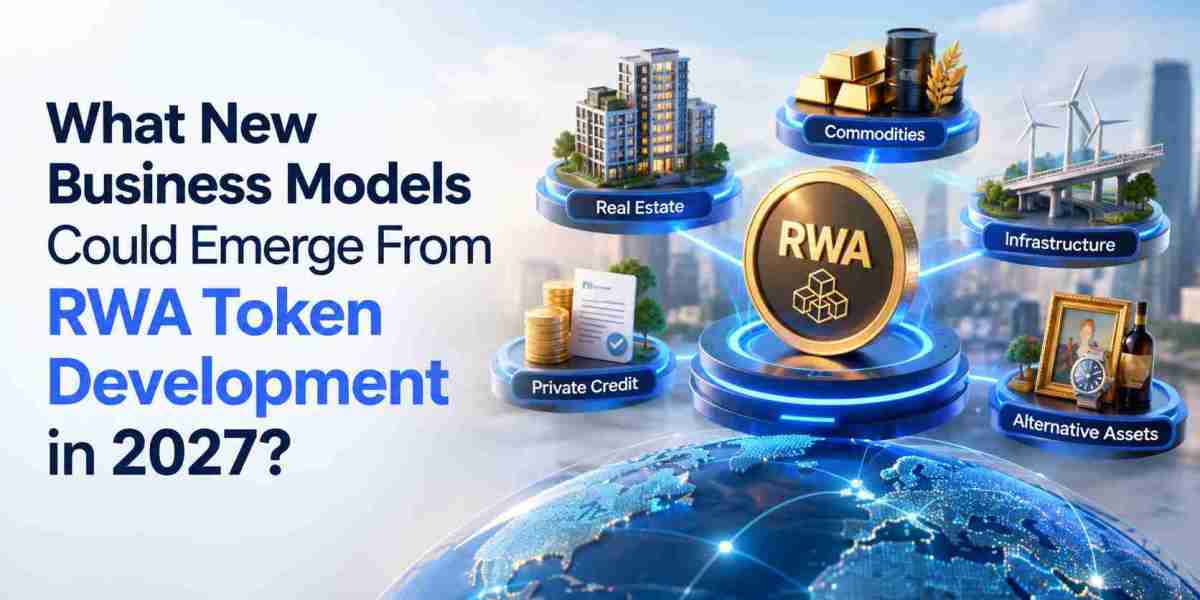

Real-world assets are moving into digital markets as businesses look for new ways to represent property, private credit, commodities, funds, infrastructure, collectibles, and other assets on blockchain networks. In 2027, RWA token development could move beyond the simple idea of dividing an asset into digital units. Businesses may begin using token-based systems to create new revenue models around ownership, financing, asset servicing, trading, data, and investor access.
The growing interest in RWA tokenization is also changing how companies think about digital asset products. Instead of treating tokens as standalone products, businesses can connect them with payment systems, investor accounts, compliance processes, lending markets, asset management services, and secondary trading environments. This creates room for several business models that were difficult to operate through traditional asset infrastructure.
For entrepreneurs and financial technology companies, the opportunity may therefore sit not only in issuing tokens but also in providing the services surrounding those tokens. This article looks at business models that could gain attention through RWA token development in 2027 and explains how companies could approach each model.
1. Tokenized Asset Issuance as a Service
One possible business model is an asset issuance service for companies that want to place real-world assets on blockchain networks without developing an entire system internally. Property owners, investment firms, lenders, commodity businesses, and private companies could use an external service provider for asset onboarding, token creation, investor management, and transaction processing.
The service provider could charge an initial setup fee followed by transaction or management fees. Revenue could also come from token issuance, investor onboarding, compliance checks, custody coordination, and ongoing asset administration.
Method
A company can start by selecting one asset category, such as commercial property or private credit. It can then create a process for asset verification, legal structuring, token issuance, investor registration, and reporting. Once the process is tested, additional asset categories can be added based on market demand.
This model could create opportunities for an RWA tokenization company that wants to serve asset owners without becoming the direct owner of the underlying assets.
2. Tokenized Private Credit Markets
Private credit is another area where RWA token development could create new commercial models. Businesses can represent loans, receivables, debt instruments, or credit funds through blockchain-based tokens. Investors may then receive digital representations of their participation in those instruments, subject to applicable securities and financial regulations.
A business operating in this segment could earn income through origination fees, servicing charges, transaction fees, and asset management fees. The platform could also provide information about repayment schedules, distributions, and outstanding balances.
Method
A company could begin with a specific credit segment, such as business loans or invoice financing. Each credit instrument can be associated with legal documentation and a digital token. Payment events can then be recorded through the platform, while investor distributions are handled according to the legal structure.
This creates a business model in which blockchain is part of a broader credit servicing system rather than simply a method for issuing digital assets.
3. Tokenized Real Estate Investment Platforms
Real estate could become one of the major categories for RWA tokenization in 2027. Property owners and investment firms may use tokens to represent economic interests in individual properties, property portfolios, development projects, or real estate funds.
An operator could generate revenue through listing fees, issuance charges, transaction fees, property administration charges, and investor account services. Additional revenue could come from premium services for asset managers and institutional clients.
Method
A business can focus on one property segment, such as commercial buildings, residential rental properties, hotels, or industrial facilities. The process can include property assessment, legal ownership arrangements, investor onboarding, token issuance, distribution management, and secondary trading support.
This creates an opportunity for an RWA tokenization platform development company to provide a complete environment for asset owners and investors while leaving property management to specialist operators.
4. Tokenized Asset Servicing Businesses
Token issuance is only one stage in the life of a tokenized asset. Once investors hold tokens, someone needs to manage distributions, reporting, corporate actions, ownership records, investor communications, and other administrative activities.
This could lead to an asset servicing business that earns recurring revenue from tokenized assets after their initial issuance.
Method
A company can provide subscription-based servicing for asset managers. Its system can track token holders, distribution schedules, documentation, transaction history, and asset-related updates. Pricing could depend on the number of assets, investors, or transactions handled.
This recurring model could be attractive because revenue would not depend entirely on launching new token offerings every month.
5. Tokenized Fund Management
Investment funds may also use blockchain-based units to represent investor participation. Real estate funds, private equity funds, credit funds, commodity funds, and other investment structures could issue digital units subject to local regulations.
A business could offer fund administration, investor reporting, subscription processing, distribution management, and token lifecycle services. Revenue could come from management fees and technology charges.
Method
The company can work with licensed fund managers and legal professionals to establish the appropriate structure. The blockchain layer can represent investor interests while existing financial and legal processes continue to govern the fund.
This approach gives fund managers a digital distribution channel without requiring them to replace every part of their existing financial infrastructure.
6. Secondary Trading Infrastructure
As the number of tokenized assets grows, investors may look for ways to trade eligible assets after the initial offering. This could create business opportunities around secondary markets designed for regulated tokenized securities and other permitted assets.
A trading platform could earn revenue from transaction fees, listing charges, custody services, and institutional access.
Method
An operator can focus on assets that meet the relevant legal requirements for secondary transactions. The platform can connect eligible buyers and sellers while maintaining investor verification, transaction records, asset information, and transfer restrictions.
Rather than treating secondary trading as an isolated exchange function, the business could connect issuance records, investor accounts, settlement processes, and asset information within one environment.
7. RWA Tokenization Infrastructure for Financial Institutions
Banks, investment firms, asset managers, and other financial institutions may require specialized infrastructure for tokenized assets. Many institutions may prefer working with technology providers instead of creating every component internally.
This creates room for infrastructure businesses that offer token issuance modules, investor management systems, smart contract functionality, transaction monitoring, asset records, and reporting tools.
Method
A technology provider can develop modular services for financial institutions. The institution can select the functions required for its use case while maintaining its existing customer and financial operations.
An RWA tokenization platform development company can generate revenue through software licensing, usage charges, transaction fees, or enterprise contracts.
8. Tokenized Commodity Financing
Commodities such as precious metals, agricultural products, energy-related assets, and other physical goods may create another area for token-based financing. Tokens can represent claims or interests connected to specific assets, inventory, or financing arrangements, depending on the legal structure.
A business could earn revenue from asset onboarding, financing arrangements, transaction processing, storage coordination, and investor services.
Method
The operator can begin with one commodity category and work with asset custodians, warehouses, traders, and financial institutions. Digital records can connect the physical asset with its legal documentation and token representation.
The commercial opportunity comes from coordinating the different parties involved in the asset lifecycle rather than from token creation alone.
9. RWA Data and Verification Services
Tokenized markets require reliable information about the assets represented by tokens. Investors and asset managers may need data related to valuations, ownership records, property conditions, repayment events, commodity inventories, and other asset information.
This creates a possible business model around RWA data services.
Method
A data provider can collect information from approved sources and make it available to token issuers, investors, financial institutions, and trading platforms. Revenue could come from subscriptions, API usage, enterprise access, or asset-level reporting fees.
An RWA tokenization company could also integrate such services into its platform, giving users access to asset information alongside token transactions.
10. Compliance and Investor Verification Services
Regulatory requirements will remain an important consideration for tokenized financial products. Businesses may need systems for identity verification, investor eligibility, transaction monitoring, jurisdiction restrictions, and record management.
This creates opportunities for specialist compliance technology providers that support tokenized asset businesses.
Method
A company can provide verification and monitoring tools that connect with token issuance and trading platforms. The service can check investor information during onboarding and apply the applicable rules for transfers or participation.
The business can charge according to the number of users, verification requests, transactions, or assets monitored.
11. Token-Based Revenue Sharing
Another potential model involves tokenized participation in revenue generated by real-world businesses or assets. Depending on the legal structure, investors could receive distributions connected to rental income, royalties, project revenues, or other cash flows.
Businesses could generate revenue by structuring and administering these arrangements.
Method
The company can identify a recurring revenue source and establish a legal structure that defines investor rights. Tokens can represent the relevant economic interest, while distribution rules can be recorded within the system.
This model could create products where investors focus on recurring cash flows rather than only waiting for an asset sale or price appreciation.
12. White-Label RWA Platforms
Many businesses may want to launch tokenized asset products under their own brand rather than developing an entire technology stack internally. This could increase demand for white-label solutions.
A provider can offer token issuance, investor management, wallet integration, administration, and trading modules while the client operates the customer-facing business.
Method
A provider can create a reusable platform architecture with configurable modules for different asset categories. Clients can then select the functions they need and operate their own branded platform.
This could become an important revenue channel for an RWA tokenization development company because the same technical foundation can support multiple business clients.
13. Tokenized Asset Management Services
Asset managers may increasingly need professionals who understand both traditional assets and blockchain-based ownership structures. This can create a hybrid service business combining asset management with token administration.
For example, a firm could manage tokenized property portfolios, private credit positions, or commodity-linked investments while providing regular reporting and distribution services.
Method
The business can partner with asset owners and licensed investment professionals. It can manage the digital representation of assets while specialists handle valuation, legal matters, property operations, or investment decisions.
Revenue may come from management fees, administration charges, and performance-related arrangements where legally permitted.
14. RWA Token Development for Niche Asset Classes
Not every tokenization business needs to target large institutional markets. Smaller asset categories may also produce commercial opportunities. Examples include intellectual property rights, equipment leases, renewable energy projects, collectibles, agricultural assets, and specialized infrastructure.
A niche-focused provider may understand one asset category better than a general-purpose platform.
Method
The company can select an asset class with an identifiable financing or ownership problem. It can then develop a token model around that asset, including legal documentation, investor access, distribution processes, and asset reporting.
For an RWA token development business, specialization can provide a way to build a focused product instead of competing across every possible asset category.
What Could Make These Business Models Different in 2027?
The major change may be the shift from selling tokens to selling services around tokenized assets. Token issuance can be a one-time event, while servicing, compliance, data, administration, trading, and asset management can generate recurring revenue.
Another difference could come from the combination of several services. A single platform might provide issuance, investor onboarding, asset administration, reporting, and secondary trading support. At the same time, specialist providers could focus on individual parts of the market and connect their services through APIs.
Businesses entering this sector will also need to consider the legal status of each token, investor rights, custody arrangements, asset ownership, transfer restrictions, taxation, and jurisdiction-specific rules. The technology can support these processes, but legal and financial structures remain central to the commercial model.
How Businesses Can Prepare for RWA Opportunities in 2027
Companies considering RWA tokenization development can begin by selecting a specific asset class and identifying the commercial problem they want to solve. The business model should come before the token design. A company that understands who pays, what service is being provided, and how recurring revenue can be generated will have a more defined product direction.
The next stage can involve selecting the blockchain architecture, token standard, wallet system, investor management tools, compliance components, and smart contract functions. Legal professionals, financial specialists, custodians, and asset managers may also be part of the operating model depending on the asset.
Testing with a limited asset category can help a company understand investor behavior, transaction requirements, operational costs, and servicing needs before expanding into additional markets.
Conclusion
RWA token development in 2027 could create business models that extend well beyond digital ownership. Asset issuance services, private credit markets, tokenized property platforms, fund administration, secondary trading, compliance services, asset data, commodity financing, revenue-sharing products, white-label platforms, and specialized asset management are among the areas that could generate commercial opportunities. The business opportunity will depend on the asset type, legal structure, investor demand, operating costs, and regulatory environment. Companies entering the sector may therefore focus on solving specific financial and operational needs rather than treating token creation as the entire product. Blockchain App Factory provides RWA tokenization development services.
FAQs
1. What is RWA token development?
RWA token development refers to creating blockchain-based tokens that represent ownership, economic interests, claims, or participation connected with real-world assets. These assets can include property, private credit, commodities, funds, infrastructure, and other eligible asset classes.
2. What business models can emerge from RWA tokenization?
Potential models include token issuance services, asset servicing, tokenized investment platforms, private credit marketplaces, compliance services, secondary trading infrastructure, asset data services, white-label platforms, and tokenized fund administration.
3. How can an RWA tokenization company generate revenue?
Revenue can come from issuance fees, transaction charges, subscriptions, asset servicing fees, platform licensing, investor onboarding, compliance services, administration fees, and other services connected with tokenized assets.
4. What is RWA tokenization platform development?
RWA tokenization platform development involves creating a technology system through which eligible real-world assets can be represented through blockchain-based tokens. Depending on the use case, the platform may include token issuance, investor management, wallets, smart contracts, compliance functions, reporting, and trading features.
5. Why could private credit become an RWA tokenization use case?
Private credit involves loans, receivables, and other financial instruments that have defined cash flows. Token-based systems can provide digital records for investor participation, repayment events, and distributions, subject to the applicable legal framework.
6. What does an RWA tokenization platform development company provide?
An RWA tokenization platform development company can provide software for asset token creation, investor onboarding, wallet connectivity, smart contracts, asset administration, compliance integrations, transaction management, and reporting, depending on the project requirements.
7. Can real estate businesses use RWA tokenization?
Yes. Eligible real estate interests can be represented through blockchain-based tokens under suitable legal structures. Potential applications include property funds, rental-income products, development projects, and investment vehicles.
8. What is the role of a real-world asset tokenization company?
A real-world asset tokenization company can provide technology and related services for converting eligible real-world asset interests into digital token structures. Its work may cover token issuance, investor systems, smart contracts, compliance integrations, and asset administration.
9. Will RWA tokenization only be used by large financial institutions?
Not necessarily. Large institutions may be significant participants, but property companies, private businesses, investment managers, commodity firms, and specialized asset owners can also investigate tokenization for suitable assets and markets.
10. What should businesses consider before starting RWA token development?
Businesses should examine the asset type, ownership structure, investor rights, applicable securities and financial regulations, custody, taxation, blockchain selection, smart contract design, investor onboarding, asset servicing, and the revenue model before beginning development.