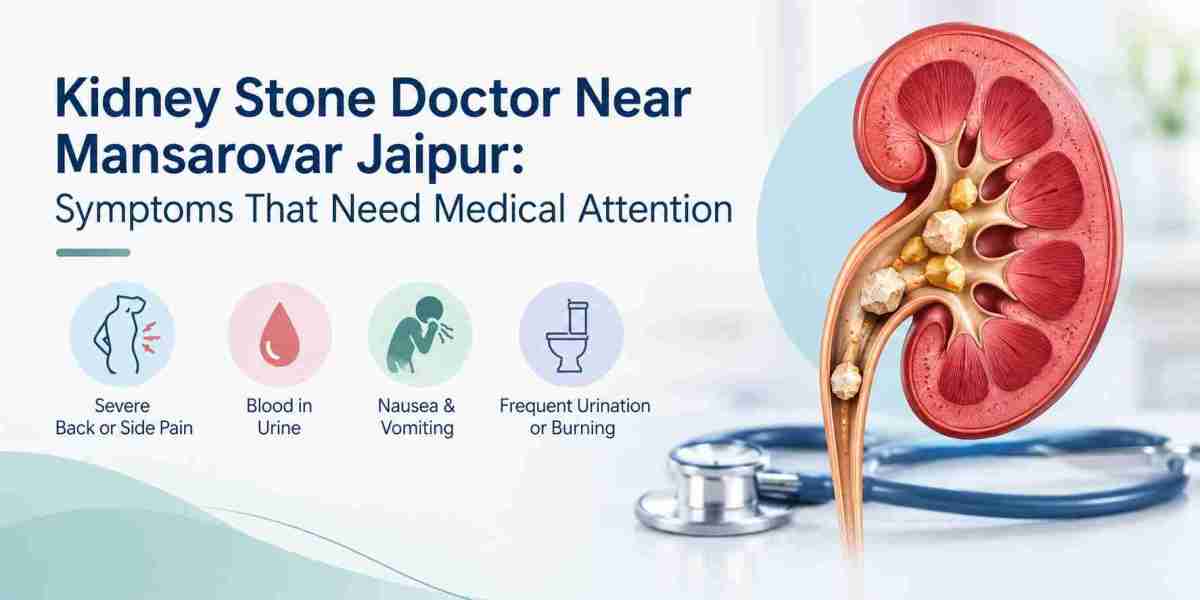

Kidney stones are hard deposits that develop when certain minerals and salts in urine become concentrated and form crystals. Small stones may pass without causing significant problems, while larger stones can become lodged in the urinary tract and lead to severe pain or other complications. Knowing when symptoms require medical attention can help prevent complications. Consulting a Kidney Stone Doctor in Mansarovar Jaipur can help determine the cause of symptoms and whether treatment is required.
What Are Kidney Stones?
Kidney stones can form when substances such as calcium, oxalate, uric acid, or other compounds become concentrated in the urine. Some stones remain in the kidney, while others travel through the ureter toward the bladder.
Symptoms vary depending on the stone's size, location, and whether it blocks urine flow. A person may have no symptoms until the stone begins moving or causes an obstruction.
Common Symptoms of Kidney Stones
1. Severe Pain in the Side or Back
One of the most recognizable symptoms is intense pain in the side or back, often below the ribs. The pain may come in waves and can move toward the lower abdomen or groin as the stone travels through the urinary tract.
Pain severity can vary, and not every person with a kidney stone experiences the same pattern.
2. Pain or Burning During Urination
A stone moving through the lower urinary tract may cause pain or burning while urinating. This symptom can also occur with urinary tract infections, so medical evaluation may be necessary to determine the actual cause.
3. Blood in the Urine
Kidney stones can irritate the lining of the urinary tract and cause blood in the urine. Urine may appear pink, red, or brown, although blood may sometimes only be detected through laboratory testing.
Blood in the urine should not automatically be attributed to kidney stones because it can have other causes and may require further evaluation.
4. Frequent or Urgent Urination
When a stone moves closer to the bladder, it may cause an increased urge to urinate or make you visit the bathroom more frequently. Some people may also experience discomfort during urination.
5. Nausea and Vomiting
Severe pain caused by a kidney stone can be accompanied by nausea or vomiting. These symptoms can make it difficult to maintain adequate fluid intake, particularly when the pain is intense.
Warning Signs That Require Prompt Medical Attention
Some kidney stone symptoms require urgent medical assessment. Seek prompt medical care if you experience severe or persistent pain, fever or chills, repeated vomiting, difficulty passing urine, or significant blood in the urine.
Fever and chills are particularly important because a blocked urinary tract combined with an infection can become a serious medical problem. Difficulty urinating may also indicate significant obstruction.
A qualified Urocare Specialist in Jaipur can evaluate the symptoms and determine whether imaging, urine tests, blood tests, or urgent treatment is required.
How Are Kidney Stones Diagnosed?
Diagnosis usually begins with a medical history and physical examination. Depending on the symptoms, doctors may recommend urine testing to identify blood or signs of infection and blood tests to assess kidney function and other factors.
Imaging can help identify the location and size of a stone. Ultrasound and CT scans may be used depending on the clinical situation. The findings help determine whether the stone is likely to pass naturally or requires intervention.
What Treatment Options Are Available?
Treatment depends on the stone's size, location, composition, symptoms, and whether there is an obstruction or infection. Smaller stones may sometimes pass naturally with appropriate medical guidance.
When a stone is unlikely to pass or causes persistent symptoms or obstruction, procedures may be considered. Depending on the case, treatment options may include shock wave lithotripsy, ureteroscopy, or other minimally invasive procedures.
Patients should not delay treatment when severe symptoms or signs of infection are present.
Kidney Stones and Other Kidney Conditions
Blood in the urine, abdominal or side pain, and urinary changes are not exclusive to kidney stones. Other kidney and urinary conditions can cause similar symptoms. Persistent or unexplained symptoms therefore require appropriate evaluation rather than self-diagnosis.
For patients with a kidney mass or suspected kidney cancer, specialist evaluation is also important. Kidney Cancer Treatment in Jaipur may involve surgery, active surveillance, targeted therapies, immunotherapy, or other approaches depending on the type and stage of the disease.
Consult Dr. Sanjay K Binwal for Kidney Stone Evaluation
Dr. Sanjay K Binwal provides urological care for kidney stones and other urinary tract conditions. If you are experiencing severe flank pain, blood in the urine, urinary difficulty, or recurring stone-related symptoms, a professional evaluation can help identify the cause and guide appropriate treatment.
Timely assessment is particularly important when symptoms are accompanied by fever, chills, vomiting, or difficulty passing urine.
FAQs
1. What is the most common symptom of a kidney stone?
Severe pain in the side or back is one of the most common symptoms. The pain may occur in waves and can radiate toward the lower abdomen or groin as the stone moves.
2. Can kidney stones cause blood in urine?
Yes. A kidney stone can irritate the urinary tract and cause blood in the urine. However, blood in the urine can have several other causes, so it should be medically evaluated.
3. When is a kidney stone an emergency?
Severe uncontrolled pain, fever or chills, repeated vomiting, inability to pass urine, or symptoms suggesting infection with urinary obstruction require prompt medical attention.
4. Can kidney stones pass without surgery?
Yes. Some small stones can pass naturally through the urinary tract. The likelihood depends on factors such as stone size and location. A doctor can assess whether observation is appropriate.
5. What tests are used to diagnose kidney stones?
Doctors may use urine and blood tests along with imaging such as ultrasound or CT scans. The choice of investigation depends on the symptoms and clinical situation.
6. Can kidney stones increase the risk of kidney cancer?
Kidney stones and kidney cancer are different conditions. Having kidney stones does not mean that a person has kidney cancer. Persistent symptoms or blood in the urine should nevertheless be evaluated to determine the actual cause.








