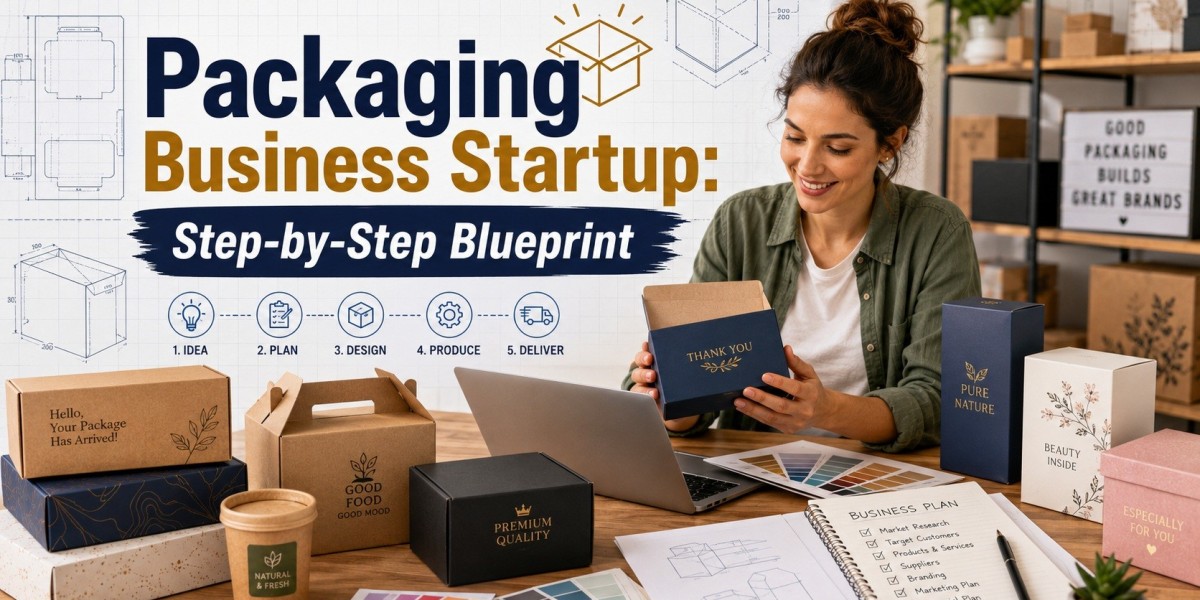

Starting a packaging business can be a smart and profitable idea. Every product needs safe, neat, and attractive packaging. Food brands, online shops, cosmetic companies, gift sellers, and many other businesses all need boxes, bags, labels, and printed packaging. This means the demand is strong.
But success does not come by just buying machines or selling boxes. You need a clear plan, good suppliers, strong service, and trust. This step-by-step blueprint will help you understand how to start a packaging business in the right way.
1. Understand the Packaging Market
Before you start, learn how the packaging market works. Packaging is not just a box. It protects products, supports branding, and helps customers trust a business. Many brands now want packaging that looks good, feels strong, and is also eco-friendly.
You should study different types of packaging, such as mailer boxes, rigid boxes, food boxes, pizza boxes, cosmetic boxes, kraft boxes, and retail packaging. Each type has a different customer. For example, food brands need safe and grease-resistant packaging. Luxury brands may need strong, rigid boxes with a premium finish.
When you understand the market, you can choose the right direction instead of trying to sell everything at once.
2. Choose Your Packaging Niche
A niche means the main area you want to focus on. In the beginning, it is better to choose one or two product types rather than selling every type of packaging. This makes your work simple and your marketing stronger.
You may focus on food packaging, ecommerce packaging, cosmetic packaging, gift packaging, or retail boxes. If you choose food packaging, you can offer bakery boxes, burger boxes, takeaway boxes, and
Custom pizza boxes for restaurants and food chains.
Choosing a niche helps you better understand your customers. You can understand their needs, prices, design styles, and common problems. This makes it easier to sell and grow.
3. Make a Simple Business Plan
A business plan does not need to be difficult. It should clearly explain what you will sell, who your customers are, how much money you need, and how you will make a profit.
Write down your startup costs. These may include website cost, sample boxes, design tools, supplier deposits, marketing, packaging catalogues, and office setup. If you plan to print in-house, you will also need machines and staff. But many beginners start by working with trusted manufacturers and suppliers first.
Your plan should also include your prices, delivery time, minimum order quantity, and profit margin. This helps you avoid confusion when customers ask for quotes.
4. Find Reliable Suppliers or Manufacturers
Your supplier is one of the most important parts of your packaging business. If your supplier gives poor quality or late delivery, your brand will suffer. So take time to find trusted manufacturers.
Ask for samples before you start selling. Check the material, print quality, box strength, cutting, folding, and finishing. A good supplier should offer clear communication, fair prices, and steady production quality.
You should also ask about available materials such as kraft paper, cardboard, corrugated board, rigid board, and food-grade stock. Learn about finishes like matte lamination, gloss lamination, foil stamping, embossing, debossing, and spot UV.
Good quality builds trust. Happy customers often come back with repeat orders.
5. Build a Strong Brand Identity
Your packaging business also needs good branding. Customers should remember your name and trust your service. Choose a clean business name, a simple logo, and a professional colour style.
Your website, social media, quotes, invoices, and email replies should all look professional. This shows customers that you are serious. Even if you are a small business, your brand should feel reliable.
You can also create a short brand message. For example, you may promise strong boxes, fast support, free design help, or eco-friendly packaging. A clear message makes your business easier to understand.
6. Create Product Samples and Mockups
Customers like to see what they are buying. So you should prepare samples and mockups. A sample shows the real material and quality. A mockup shows how the box will look with design, colour, and text.
You can create 2D and 3D mockups for customers before production. This helps them feel safe before placing an order. It also reduces mistakes.
Samples are also useful for marketing. You can take photos and videos of your boxes and post them on your website and social media. Real product images build more trust than plain text.
7. Set Clear Pricing
Pricing is very important. If your prices are too high, customers may leave. If your prices are too low, you may lose money. You need a balance.
Your price should include material cost, printing cost, finishing cost, shipping cost, design cost, and your profit. Also think about order quantity. Larger orders usually have a lower price per box because setup costs are shared across more units.
Be clear with customers about what is included. Tell them if design support, delivery, mockups, or setup are free or charged. Clear pricing prevents problems later.
8. Build a Professional Website
A website is a must for a packaging business. Many customers search online before they contact a supplier. Your website should explain your products, services, materials, finishes, and order process.
Create separate pages for each product type. For example, make pages for mailer boxes, food boxes, rigid boxes, cosmetic boxes, and gift boxes. Use simple words and helpful images.
Your website should also include contact details, quote forms, FAQs, delivery information, return policy, and customer reviews. Make it easy for visitors to ask for a quote.
A good website works like a 24-hour salesperson for your business.
9. Offer Design Support
Many customers do not have ready artwork. Some only have a logo and a basic idea. If you can help them with design, you will have a strong advantage.
Offer simple design help, dielines, and mockups. Explain where the logo, product name, ingredients, barcode, and brand message should go. This makes the customer journey easier.
Good packaging design can make a simple box look premium. This is where creative packaging can help small brands stand out and look more professional.
10. Focus on Quality Control
Quality control means checking the order before it reaches the customer. This step is very important. A small mistake in size, colour, spelling, or material can damage customer trust.
Before production, confirm the size, quantity, material, print file, finish, and delivery address. During production, check samples or photos, if possible. Before dispatch, inspect the final boxes.
Good quality control saves money, time, and stress. It also shows customers that you care about their order.
11. Market Your Packaging Business
Marketing helps people find your business. You can start with SEO, social media, Google Business Profile, email outreach, and content writing.
SEO is useful because many buyers search for packaging online. Write helpful product pages and blog posts. Use keywords naturally, but do not stuff them. Your content should answer real customer questions.
Social media is also helpful. Post box designs, before-and-after mockups, packaging tips, and customer success stories. Short videos can work very well because packaging is visual.
You can also contact local restaurants, bakeries, cosmetic brands, clothing stores, and e-commerce sellers. Many small businesses need better packaging but do not know where to start.
12. Give Great Customer Service
Customer service can make or break your packaging business. Many customers are confused about size, material, artwork, and printing. They need clear guidance.
Reply quickly. Use simple words. Ask the right questions. Give honest advice. Do not promise what you cannot deliver. If there is a delay or issue, tell the customer early.
A customer who gets good service is more likely to order again. They may also recommend your business to others.
13. Start Small and Grow Step by Step
You do not need to start with a big office or expensive machines. Many successful packaging businesses begin small. You can start with a website, trusted suppliers, samples, and strong customer service.
As orders grow, you can add more products, hire staff, improve your systems, and invest in better tools. Growth should be steady and planned.
Track your sales, profit, customer feedback, and repeat orders. These numbers will show what is working and what needs improvement.
Final Thoughts
Starting a packaging business is a great opportunity, but it needs planning, patience, and quality work. You must understand the market, choose a niche, work with reliable suppliers, build a trusted brand, and support customers from start to finish.
The packaging industry keeps growing because every business needs safe and attractive packaging. If you focus on quality, clear communication, and helpful service, your packaging startup can become a strong and trusted business over time.