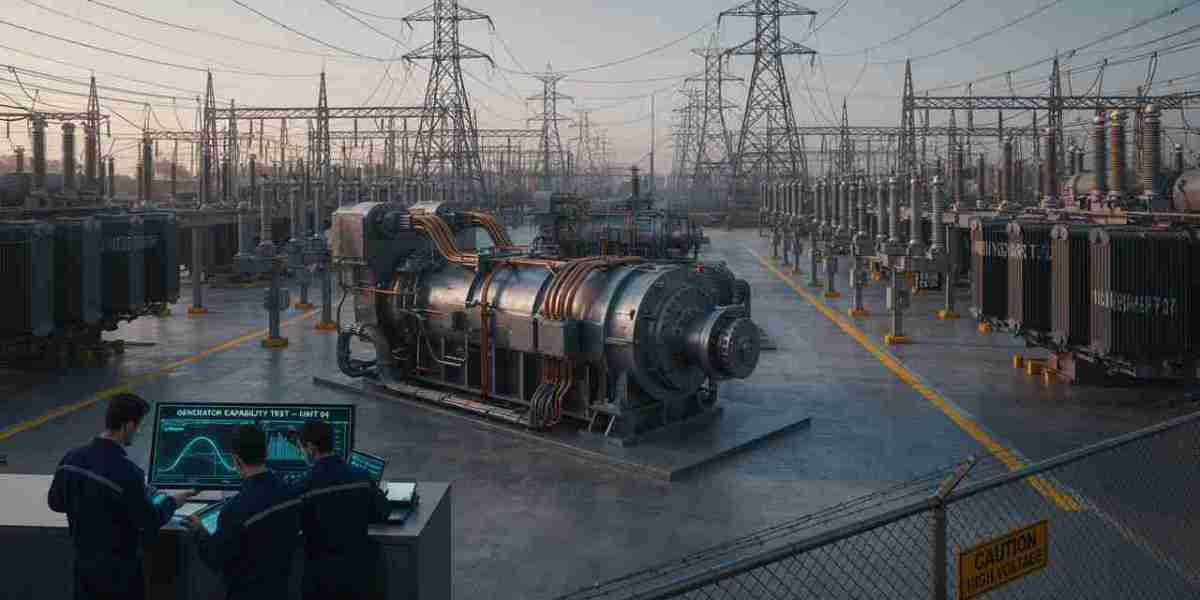

Reliable electrical infrastructure does not happen by accident. From substations and switchgear to transformers, protection systems, and distribution equipment, every component must operate correctly as part of the larger power network. Electrical testing and commissioning provide the structured process needed to verify that equipment has been installed correctly, configured properly, and is ready for safe operation.
For utilities, industrial facilities, renewable energy projects, commercial buildings, and critical infrastructure, commissioning helps identify issues before they become costly operational problems. A well-planned commissioning process also creates confidence that electrical systems will perform according to their design requirements when energized and placed into service.
Why Electrical Testing and Commissioning Matter
Modern power systems contain many interconnected components. A problem with one device can affect protection, power quality, system stability, or equipment performance elsewhere in the network. Visual inspections alone cannot confirm that an electrical installation will perform correctly under actual operating conditions.
Testing evaluates individual components and systems against specified requirements, while commissioning brings those elements together and verifies their coordinated operation. This makes the process particularly important for complex facilities where protection, control, automation, and power equipment must communicate and respond correctly.
Effective electrical system commissioning can help confirm equipment functionality, identify installation errors, verify protection settings, and reduce the risk of unexpected failures after energization.
Key Stages of the Commissioning Process
A successful commissioning program normally begins during project planning rather than immediately before startup. Early preparation allows engineers to understand the electrical design, equipment specifications, protection philosophy, control requirements, and applicable standards.
The process commonly includes several stages:
Design and documentation review: Engineers examine drawings, equipment specifications, single-line diagrams, wiring diagrams, protection settings, and manufacturer documentation.
Visual and mechanical inspection: Equipment is inspected for correct installation, physical damage, labeling, grounding, cable termination, mechanical operation, and proper clearances.
Electrical testing: Individual components are tested to verify insulation, continuity, resistance, protection functions, control circuits, and other relevant characteristics.
Functional testing: Control systems, breakers, relays, interlocks, alarms, and automation functions are operated to confirm correct responses.
Integrated system testing: Connected equipment is tested as a coordinated system before final energization and handover.
This structured approach helps ensure that commissioning is not treated as a final formality but as an essential part of quality assurance.
Equipment and Systems That Requires Testing
Different electrical assets require different testing procedures. The exact test program depends on the equipment type, voltage level, project requirements, manufacturer recommendations, and applicable standards.
Commonly tested equipment includes transformers, medium- and high-voltage switchgear, circuit breakers, disconnect switches, instrument transformers, cables, busbars, grounding systems, protective relays, control panels, batteries, and power distribution equipment.
For example, transformer testing may include insulation resistance, winding resistance, turns-ratio verification, and other appropriate diagnostic tests. Circuit breakers may require mechanical operation checks, contact resistance measurements, timing tests, and functional verification.
Protective relays also require careful testing because incorrect settings or wiring can prevent protection systems from responding appropriately during faults. Relay testing should verify pickup values, trip logic, communication signals, and coordination with associated protection devices.
Building an Effective Commissioning Checklist
A detailed commissioning checklist provides engineers and project teams with a consistent method for tracking testing activities and documenting results. It can also reduce the likelihood of important verification steps being overlooked during a complex startup.
A practical checklist may include:
- Equipment identification and nameplate verification
- Installation and mechanical inspection
- Cable and termination inspection
- Grounding and bonding verification
- Insulation and continuity testing
- Breaker and switch operation
- Transformer testing
- Protective relay testing
- Control circuit verification
- Alarm and interlock testing
- Metering verification
- Communication and SCADA signal checks
- Protection trip testing
- Functional and integrated system testing
- Test-result documentation
- Deficiency tracking and corrective actions
- Final energization approval
The checklist should be tailored to the project rather than treated as a generic document. Each piece of equipment has different testing requirements, and project-specific risks should be incorporated into the commissioning plan.
Protection, Controls, and System Integration
Testing individual components is only part of the process. Electrical infrastructure must also demonstrate that its protection and control functions operate correctly as an integrated system.
Protection systems are designed to detect abnormal conditions and isolate faults while minimizing disruption to healthy portions of the network. During electrical commissioning, engineers can verify relay settings, breaker operation, trip circuits, interlocks, control signals, and communication paths.
For substations and industrial facilities, commissioning may also involve SCADA and automation systems. Engineers can confirm that status indications, measurements, alarms, commands, and remote-control functions are correctly transmitted between field equipment and supervisory systems.
Integrated testing is especially valuable because equipment may pass individual tests but still experience problems when connected to other systems. Testing the complete control and protection sequence helps uncover wiring, logic, communication, and configuration issues before the facility enters normal operation.
Documentation, Safety, and Final Handover
Documentation is one of the most important outputs of a commissioning program. Test results provide a baseline for future maintenance, troubleshooting, and asset management. Proper records should identify the equipment tested, test methods, instruments used, measured values, acceptance criteria, and any corrective actions completed.
Safety must remain a central consideration throughout the process. Commissioning activities can involve energized or potentially energized equipment, high fault currents, stored electrical energy, and complex switching operations. Appropriate procedures, isolation practices, personal protective equipment, and qualified personnel are essential.
Once testing is complete, deficiencies should be reviewed and resolved before final acceptance. The completed commissioning documentation can then support project handover, operator training, maintenance planning, and future system assessments.
Supporting Reliable Power Infrastructure
Electrical testing and commissioning provide more than a startup procedure. They create a structured method for confirming that electrical infrastructure has been installed, configured, tested, and integrated according to project requirements.
A carefully planned commissioning program can reduce startup risks, identify defects early, improve protection performance, and provide valuable operational documentation. Whether a project involves a new substation, industrial power system, renewable energy facility, commercial development, or critical infrastructure, systematic testing is an important investment in long-term reliability.
By combining engineering review, equipment testing, functional verification, integrated system checks, and detailed documentation, project teams can establish a stronger foundation for safe and dependable electrical operation. For complex power infrastructure, commissioning is not simply the final step—it is an essential part of delivering a system that is ready to perform when it matters most.