
It often starts with a loud snap. One minute, your garage door works like it always does. The next, it feels too heavy to lift, the opener strains, or the door stops halfway. Most homeowners think the opener has failed, but many times the real problem sits above the door. The spring has finally given out. If you want a trained team to inspect the system before it reaches that point, Palma Group Pro can help with garage door maintenance in Parkland and support from garage door repair experts in Florida.
Garage door springs do more work than most people realise. Every time the door opens or closes, the spring carries the weight. The opener only guides the movement. The spring does the heavy lifting. When that spring weakens, the whole system feels the stress. The opener works harder. The cables can slip. The door can move unevenly. In some cases, it can drop fast and cause damage.
That is why a broken spring is not a small issue. It affects safety, access, and the life of your garage door system.
How Garage Door Springs Work
A garage door may look simple from the outside, but the spring system works under high tension. Most homes use either torsion springs or extension springs.
Torsion springs sit above the garage door. They twist and store energy as the door closes. When the door opens, they release that energy and help lift the weight. Extension springs usually sit along the sides of the door tracks. They stretch and contract during movement.
Both types have one job. They balance the weight of the door. A balanced door should move smoothly and stay in place when lifted halfway by hand. If it drops, rises, shakes, or feels heavy, the spring system may need attention.
Many people do not notice spring wear until the door stops working. That is because springs often fail slowly. They lose strength over time, but the opener hides the problem for a while. Then one day, the spring breaks and the door becomes stuck.
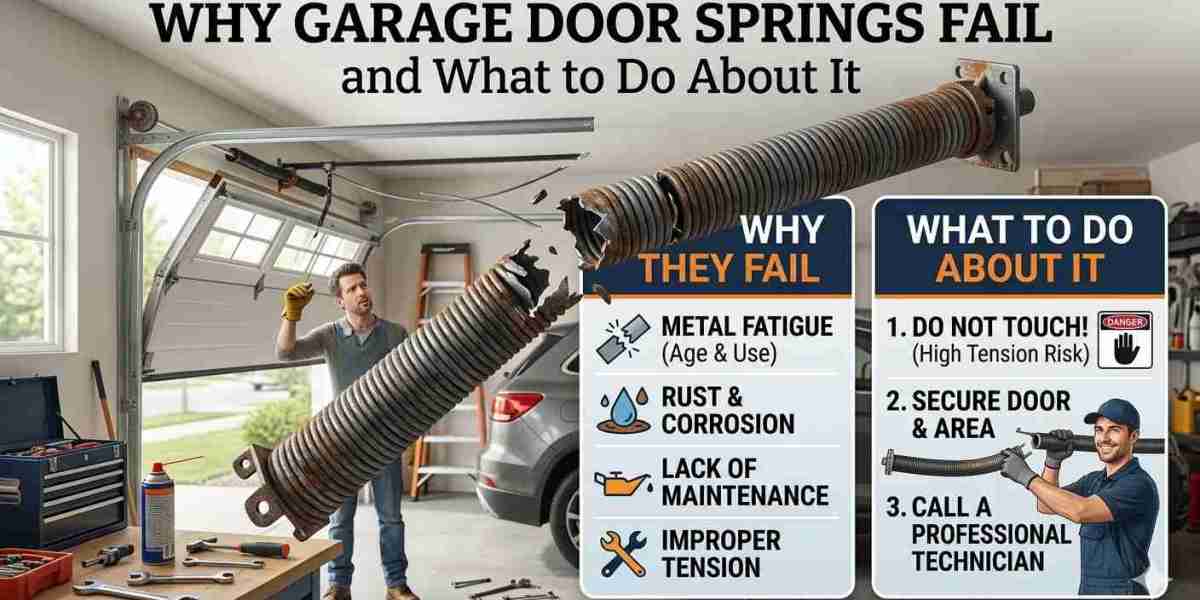
Why Garage Door Springs Fail
The most common reason is normal wear. Garage door springs have a cycle life. One cycle means one full opening and closing. If you use the garage as your main entrance, the spring may go through several cycles each day. Over the years, that adds up fast.
Rust is another major reason. Moisture can settle on metal parts and cause corrosion. Rust weakens the spring coils and creates friction. Once friction increases, the spring has to work harder. This can shorten its life.
Poor maintenance also plays a part. Springs need the right care. A little inspection, cleaning, and proper lubrication can help the system move better. When homeowners ignore the door for years, small issues grow. Loose hardware, dry rollers, worn cables, and unbalanced movement can all add pressure to the spring.
Wrong spring size can also cause early failure. A spring must match the weight and height of the door. If someone installs a spring that is too weak, it may break sooner. If the spring is too strong, the door may not close properly. Either case can damage other parts.
Weather changes can also affect garage door springs. Heat, humidity, rain, and sudden temperature shifts can make metal expand, contract, and weaken over time. The spring may still work, but each cycle adds more strain.
The last reason is poor installation. Garage door spring replacement is not a guessing job. The technician must set the correct tension, check the door balance, inspect the cables, and test the full system. If any step gets skipped, the door may become unsafe.
Warning Signs Before a Spring Breaks
A spring usually gives a few signs before it fails. You may hear new sounds, such as squeaking, grinding, or popping. The door may feel heavier than usual. It may open a few inches and stop. The opener may make noise but fail to lift the door.
You may also see a visible gap in the spring. This is a strong sign that the spring has snapped. Sometimes the door becomes crooked because one side lifts faster than the other. In other cases, the cables hang loose near the tracks.
Here are signs you should not ignore:
A loud bang from the garage
A door that feels too heavy to lift
A door that opens unevenly
A garage door opener that struggles
Loose or hanging cables
A visible gap in the spring coil
Fast closing or sudden dropping
If you notice these signs, stop using the door. Do not keep pressing the opener button. This can burn out the opener or damage the tracks.
What You Should Do When a Spring Fails
First, keep people and pets away from the door. A broken spring can make the door unstable. Do not try to force it open. A garage door can weigh hundreds of pounds, and without spring support, it can fall.
Second, disconnect the opener only if it is safe to do so. If the door is fully closed, leave it closed. If it is stuck open or halfway, do not stand under it. Call a professional instead.
Third, do not attempt torsion spring repair on your own. These springs hold strong tension. A wrong move can cause serious injury. Online videos may make it look simple, but garage door spring replacement needs the right tools, training, and safety steps.
A trained technician will inspect the spring, cables, drums, rollers, hinges, tracks, and opener. This matters because a broken spring can be a symptom of a larger balance problem. Replacing only the spring without checking the rest of the system can lead to another failure.
How to Help Springs Last Longer
You cannot make a spring last forever, but you can reduce early wear. Start by listening to your door. A smooth garage door should not make harsh sounds. If the door becomes noisy, slow, or shaky, schedule an inspection.
Keep the moving parts clean. Use the correct lubricant on springs, rollers, and hinges. Avoid heavy grease because it can attract dirt. Check the balance at least once or twice a year. To do this safely, close the door, disconnect the opener, and lift the door halfway by hand. If it does not stay in place, the spring may need adjustment.
Also, avoid adding extra weight to the door. New insulation, decorative hardware, or heavy panels can change the balance. If you upgrade the door, ask a technician to check whether the spring still matches the door weight.
Routine maintenance helps spot small issues before they turn into a garage door emergency. It can also protect your opener, tracks, and cables from extra strain.
When to Call a Professional
Call a professional if the door feels heavy, moves unevenly, or stops opening. You should also call if you hear a loud snap or see a broken spring. Fast service matters because a stuck garage door can block your car, leave your home exposed, or interrupt your day.
Spring work is not only about replacing a part. It is about restoring safe balance to the whole door system. The right technician will choose the correct spring size, set the proper tension, test the door by hand, and make sure the opener works without strain.
If you need garage door replacement torsion springs in Parkland FL, a replacement spring for garage door, or garage door replacement springs, choose a team that understands full system safety. Palma Group Pro also helps with garage door spring repair in Boca Raton, garage door repair spring replacement, garage door emergency service, and garage door repair Naples FL. When your door starts showing signs of spring failure, contact Palma Group Pro and get the repair handled before the problem grows.