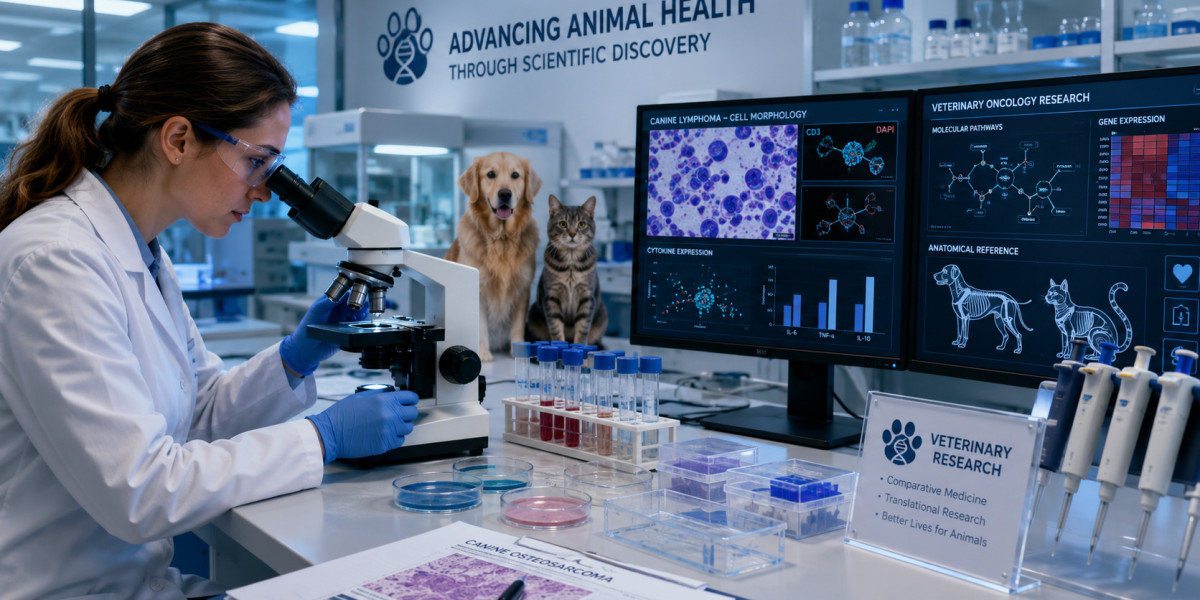

While much of the public discussion focuses on human medicine, companion animal health is also gaining attention, especially in diseases where dogs naturally develop conditions that resemble human disorders. Cancer, immune-mediated diseases, metabolic disorders, and inherited conditions are all examples of disease areas where canine-specific research can provide valuable translational insights.
For this reason, canine-specific gene therapy discovery is not simply a matter of applying human or rodent research systems to dogs. Instead, it requires research workflows that consider canine biology, disease presentation, immune response, tissue specificity, and preclinical model relevance. A well-designed discovery framework may include species-specific animal health research, customized in vitro models, animal model development, biomarker analysis, and broader biologics research support.
Why Dogs Are Important in Translational Research
Dogs share many naturally occurring diseases with humans, including certain cancers, genetic disorders, inflammatory conditions, and metabolic diseases. Unlike many experimentally induced rodent models, canine diseases often arise spontaneously in a real-world biological environment. This can make canine research especially valuable for understanding disease progression, therapeutic response, and safety considerations.
In veterinary medicine, this relevance is also practical. The goal is not only to generate knowledge for comparative medicine but also to support the development of better therapies for companion animals themselves. For canine gene therapy discovery, species-specific research models can help investigators evaluate whether a therapeutic concept is biologically meaningful before advancing into more complex preclinical studies.
The Role of Species-Specific Animal Health Research
A species-centered approach is essential in canine gene therapy research. Human and rodent systems can provide useful early information, but they may not fully reflect canine physiology, immune biology, or disease mechanisms. For example, a delivery strategy that performs well in a mouse model may behave differently in dogs because of differences in tissue distribution, immune recognition, vector response, or disease microenvironment.
Species-specific animal health research helps bridge this gap. By focusing on canine and feline biology when appropriate, researchers can better assess target relevance, tissue response, immune compatibility, and study design. This approach can also help identify potential limitations earlier in development, reducing the risk of relying on models that are not sufficiently predictive for companion animal applications.
Mapping Disease Areas for Canine Gene Therapy Discovery
Before selecting a model or testing system, researchers need to define the disease context clearly. Canine gene therapy discovery may involve inherited disorders, oncology-related indications, immune-mediated diseases, metabolic conditions, or other complex companion animal health challenges.
A structured review of relevant animal health research areas can help investigators connect disease biology with suitable experimental strategies. This step is important because gene-based intervention is highly dependent on target selection, tissue specificity, delivery method, and disease mechanism.
In Vitro Models in Canine Gene Therapy Discovery
Customized in vitro models are often used in the early stages of gene therapy discovery. These systems may include canine-derived cells, tissue-relevant culture models, or disease-specific cellular platforms. Their purpose is to help researchers evaluate mechanism of action, target engagement, potency, safety signals, and biological response in a controlled environment.
For early-stage programs, pet health in vitro model customization can support faster screening and reduce unnecessary animal use. In vitro models may help researchers compare delivery strategies, assess gene expression patterns, study pathway modulation, or identify potential toxicity concerns before moving into in vivo studies.
However, in vitro systems are not a complete substitute for animal studies. They are most useful when integrated into a broader workflow that includes disease biology, preclinical modeling, and translational assessment.
Why Animal Models Remain Important
In vivo models remain essential for understanding complex biological questions that cannot be fully answered in cell-based systems. In canine gene therapy discovery, animal models may help evaluate biodistribution, therapeutic durability, immune response, pharmacokinetics, pharmacodynamics, biomarker changes, and disease-modifying activity.
A relevant animal model can provide insight into how a candidate therapy behaves in a living system. This is especially important for gene-based approaches, where delivery efficiency, tissue targeting, immune activation, and long-term expression may all influence therapeutic feasibility.
For companion animal research, pet health animal model customization may support preclinical evaluation in a way that better reflects veterinary disease biology.
How Biologics Research Supports Gene Therapy Discovery
Although gene therapy focuses on genetic targets and delivery strategies, broader biologics expertise can also support the discovery process. Antibody research, for example, is not gene therapy itself, but it may contribute to target validation, pathway analysis, disease mechanism studies, and companion biologics development.
In some programs, pet therapeutic antibody R&D may help researchers better understand disease pathways before selecting a gene-based intervention. In other cases, antibody-based approaches may complement gene therapy research by providing comparative data or supporting biomarker development.
This integrated perspective is useful because many complex canine diseases may require more than one therapeutic strategy. Understanding how gene therapy, biologics, and disease models interact can support more rational research planning.
Building a More Relevant Discovery Workflow
A practical canine-specific gene therapy discovery workflow may include several connected steps:
l Identifying the target disease and relevant canine biology
l Selecting appropriate species-specific research models
l Developing customized in vitro systems for early screening
l Using animal models to evaluate therapeutic feasibility
l Assessing efficacy, safety, immune response, and biomarkers
l Integrating data to guide preclinical decision-making
This type of workflow can help reduce early research uncertainty and support more informed candidate selection. It also improves the transition from exploratory discovery to preclinical validation.
Conclusion
Canine-specific gene therapy discovery requires more than a general understanding of gene delivery. It depends on species-relevant disease biology, carefully designed in vitro systems, appropriate animal models, and translational research strategies that reflect the needs of companion animal health.
As veterinary medicine continues to adopt advanced therapeutic modalities, canine-focused discovery frameworks will likely become increasingly important. By using biologically relevant models and integrated research approaches, investigators can generate more meaningful data for the development of next-generation gene-based therapies for canine diseases.
Educational Note: This article is intended for general educational purposes only. It does not provide medical, veterinary, regulatory, or clinical guidance.






