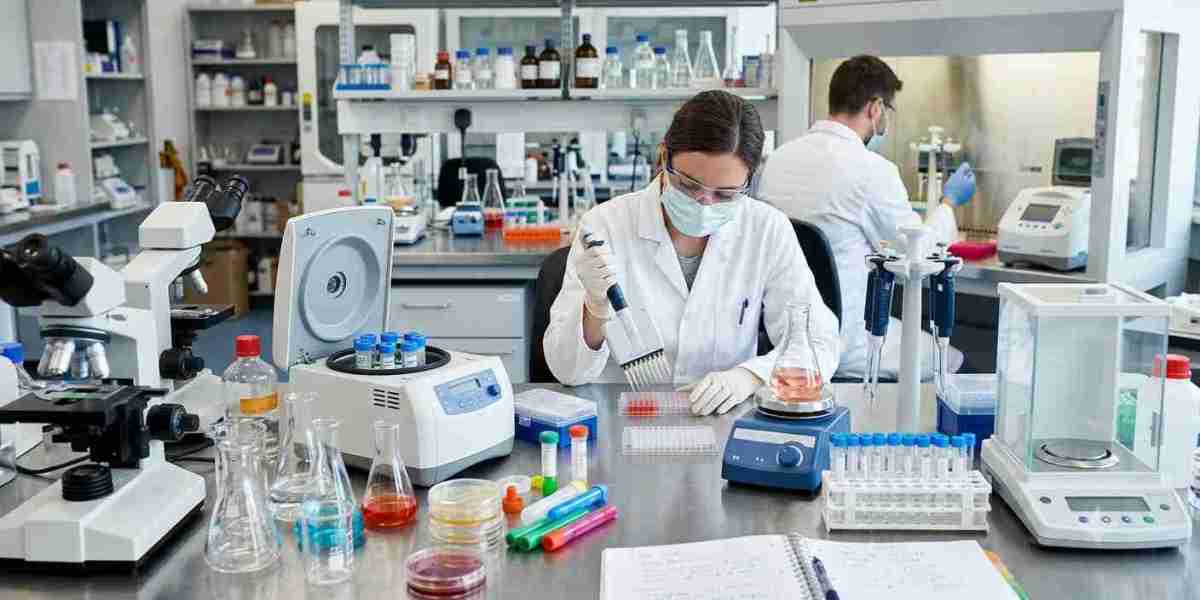

In this guide, you will learn what laboratory equipments are, why they are important, and which tools are commonly used in modern laboratories. Whether you are a student, researcher, or laboratory manager, this article will help you understand the essentials in a simple and practical way.
What Are Laboratory Equipments?
Laboratory equipments are the tools, instruments, and devices used in laboratories for scientific research, testing, analysis, and experimentation. They help scientists measure, observe, mix, heat, cool, and analyze different materials safely and accurately. From basic glassware to advanced digital instruments, laboratory equipments play a key role in almost every scientific field. These fields include chemistry, biology, environmental science, medicine, pharmaceuticals, food testing, and engineering.
For beginners, think of laboratory equipments as the "toolbox" of a scientist. Just as a mechanic needs specialized tools to repair a car, scientists need the right equipment to conduct experiments successfully. The quality of laboratory equipments directly affects the accuracy of results. Therefore, laboratories invest in reliable and well-maintained tools to ensure trustworthy findings.
Essential Laboratory Equipments for Scientific Success
1. Microscopes
Microscopes allow scientists to see tiny objects that are invisible to the naked eye.
For example, biologists use microscopes to study cells, bacteria, and microorganisms. Modern digital microscopes can capture images and videos, making research easier and more accurate.
2. Analytical Balances
An analytical balance measures weight with high precision.
Even a small error in measurement can affect an experiment. Therefore, analytical balances are considered one of the most important laboratory equipments in research facilities.
3. Centrifuges
Centrifuges separate substances based on their density by spinning samples at high speed.
These devices are widely used in medical laboratories, pharmaceutical companies, and research institutions. They help separate blood components, proteins, and other materials quickly.
4. Spectrophotometers
Spectrophotometers measure how much light a sample absorbs.
Scientists use them to analyze chemicals, determine concentrations, and perform quality control testing. This equipment is common in environmental and pharmaceutical laboratories.
5. Incubators
Incubators provide controlled temperature conditions for growing microorganisms and cell cultures.
They are essential for biological research, clinical testing, and pharmaceutical development.
6. pH Meters
A pH meter measures the acidity or alkalinity of a substance.
Accurate pH measurement is important in water testing, food production, chemical manufacturing, and environmental monitoring.
7. Hot Plates and Magnetic Stirrers
These tools help heat and mix samples safely.
Researchers often use them during chemical reactions and solution preparation. They improve efficiency while maintaining consistency in experiments.
8. Fume Hoods
Safety is a major concern in any laboratory.
Fume hoods protect users from harmful fumes, gases, and chemical vapors. They create a safer working environment and support compliance with safety regulations.
How to Choose the Right Laboratory Equipments
Selecting the right laboratory equipments can improve productivity and reduce errors. Here are some practical steps to follow:
Identify Your Laboratory Needs
Firstly, determine the type of work your laboratory performs.
A pharmaceutical laboratory may need advanced analytical instruments, while a school laboratory may require basic educational tools.
Focus on Accuracy and Quality
Always choose equipment from trusted manufacturers.
High-quality laboratory equipments provide more reliable results and often last longer than cheaper alternatives.
Consider Safety Features
Safety should never be overlooked.
Look for equipment with built-in protection systems, emergency controls, and compliance certifications.
Evaluate Maintenance Requirements
Some instruments require regular calibration and servicing.
Before purchasing, understand the maintenance needs and available support services.
Check Future Scalability
Laboratory needs often grow over time.
Investing in equipment that can support future research requirements can save money in the long run.
Common Mistakes to Avoid
Many laboratories make mistakes when purchasing or using equipment. Avoiding these errors can improve efficiency and accuracy.
Buying Based Only on Price
Cheaper equipment may seem attractive initially. However, low-cost tools can result in poor performance and higher maintenance expenses later.
Ignoring User Training
Even advanced instruments can produce incorrect results if users are not properly trained.
Regular training helps staff operate laboratory equipments correctly and safely.
Skipping Calibration
Calibration ensures measurement accuracy.
Failing to calibrate equipment regularly can lead to unreliable data and failed experiments.
Neglecting Maintenance
Routine maintenance keeps equipment functioning efficiently.
A preventive maintenance schedule can reduce downtime and extend equipment lifespan.
Overlooking Safety Standards
Laboratories must follow safety regulations.
Always verify that equipment meets industry standards before purchase and use.
Conclusion
The success of any scientific experiment depends heavily on the quality and reliability of laboratory equipments. From microscopes and centrifuges to pH meters and spectrophotometers, each tool serves a specific purpose in achieving accurate results.
By understanding how these instruments work, choosing the right equipment, and following proper maintenance practices, laboratories can improve performance and ensure dependable outcomes. Start exploring the latest laboratory technologies today and invest in tools that support long-term scientific success.
FAQs
1. What are the most commonly used laboratory equipments?
Some of the most commonly used laboratory equipments include microscopes, analytical balances, centrifuges, incubators, pH meters, spectrophotometers, and hot plates.
2. Why are laboratory equipments important?
They help scientists perform experiments accurately, collect reliable data, maintain safety standards, and achieve consistent research results.
3. How often should laboratory equipment be calibrated?
Calibration frequency depends on the instrument and usage level. However, most laboratories follow a scheduled calibration program at regular intervals.
4. What factors should be considered when buying laboratory equipments?
Important factors include accuracy, quality, safety features, maintenance requirements, manufacturer support, and future scalability.
5. What are the latest trends in laboratory equipments?
Current trends include laboratory automation, artificial intelligence integration, digital monitoring systems, cloud-based data management, and smart analytical instruments.








