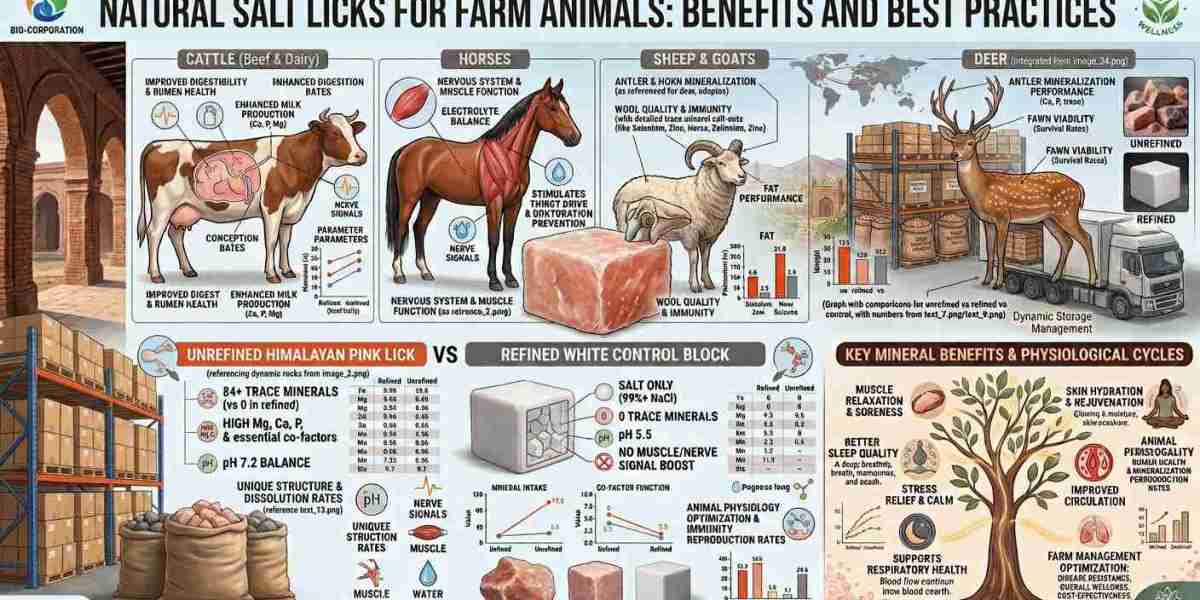

Natural salt licks have been used by farmers and ranchers for generations to support the health and productivity of livestock. While fresh water, quality forage, and balanced feed form the foundation of animal nutrition, minerals are equally important. A natural salt lick offers an easy and effective way to provide animals with essential sodium and trace minerals they need every day.
Whether you raise cattle, horses, sheep, goats, buffalo, or other livestock, providing access to salt licks can improve hydration, digestion, muscle function, and overall well-being. Himalayan salt licks, in particular, are valued for their purity, durability, and naturally occurring mineral content.
In this guide, we'll explore the benefits of natural salt licks, best practices for using them, and how they can support healthier farm animals.
What Are Natural Salt Licks?
A natural salt lick is a solid block or rock of mineral-rich salt that animals lick whenever they need additional sodium and essential minerals. Unlike loose salt or mineral supplements, salt licks allow livestock to regulate their own intake naturally.
Natural Himalayan salt licks are mined from ancient salt deposits and contain sodium chloride along with naturally occurring trace minerals that support animal health.
Why Farm Animals Need Salt
Salt is one of the most important nutrients in livestock nutrition. It supports numerous body functions, including:
- Maintaining electrolyte balance
- Supporting healthy muscle contractions
- Helping nerve function
- Encouraging proper hydration
- Stimulating appetite
- Improving digestion
- Supporting reproductive health
Without enough salt, animals may experience poor feed intake, slower growth, dehydration, reduced milk production, and lower overall performance.
Benefits of Natural Salt Licks
1. Provides Essential Minerals
A natural salt lick supplies sodium and naturally occurring trace minerals that support many biological processes.
2. Encourages Better Water Intake
Livestock naturally drink more water after consuming salt. Proper hydration improves digestion, nutrient absorption, and temperature regulation.
3. Supports Healthy Growth
Growing animals require minerals for strong bones, muscle development, and healthy body function. Regular access to salt licks helps maintain balanced nutrition.
4. Improves Feed Efficiency
Animals receiving adequate minerals often make better use of the feed they consume, improving productivity and reducing waste.
5. Convenient Self-Regulation
Unlike measured supplements, animals naturally consume only the amount of salt their bodies require.
Which Farm Animals Benefit?
Natural animal salt lick products are suitable for many livestock species, including:
- Cattle
- Horses
- Sheep
- Goats
- Buffalo
- Camels
- Deer
- Alpacas
Different species have varying mineral requirements, but all benefit from access to high-quality salt.
Salt Lick for Cattle
Providing a salt lick for cattle supports healthy growth, milk production, reproduction, and weight gain.
Cattle lose minerals through sweating, milk production, and normal metabolism. Replacing these minerals helps maintain herd productivity throughout the year.
Explore our premium Animal Lick Salt products:
? https://himalyanpinksalt.com/lick-salt/
Salt Lick for Horses
A quality salt lick for horses helps replace sodium lost through sweat.
Working horses, racehorses, and horses living in warm climates especially benefit from regular access to a horse salt lick.
Benefits include:
- Better hydration
- Muscle recovery
- Electrolyte balance
- Improved performance
Deer Salt Lick
Wildlife enthusiasts and landowners often use a deer salt lick to supplement natural forage.
A salt lick for deer provides valuable minerals that support body condition and antler development.
A natural deer licking salt block is commonly placed along trails or feeding areas where deer frequently travel.
Why Choose Himalayan Salt Licks?
Many farmers prefer Himalayan salt because it is:
- Naturally sourced
- Long-lasting
- Highly durable
- Rich in naturally occurring trace minerals
- Free from unnecessary chemical additives
These qualities make Himalayan salt licks an excellent option for livestock and wildlife.
Best Practices for Using Natural Salt Licks
Place Near Water Sources
Animals often consume salt before drinking water. Position salt licks close to watering stations whenever possible.
Keep Salt Licks Dry
Protect salt blocks from excessive rain or standing water to reduce waste and extend their lifespan.
Make Them Easily Accessible
Place salt licks where every animal in the herd can reach them comfortably.
Avoid overcrowded areas that may prevent weaker animals from accessing minerals.
Monitor Consumption
Observe how quickly your livestock consume salt.
Excessive or very low intake may indicate dietary imbalances that require further evaluation.
Replace Worn Salt Blocks
Inspect salt licks regularly and replace them before they become too small or contaminated.








