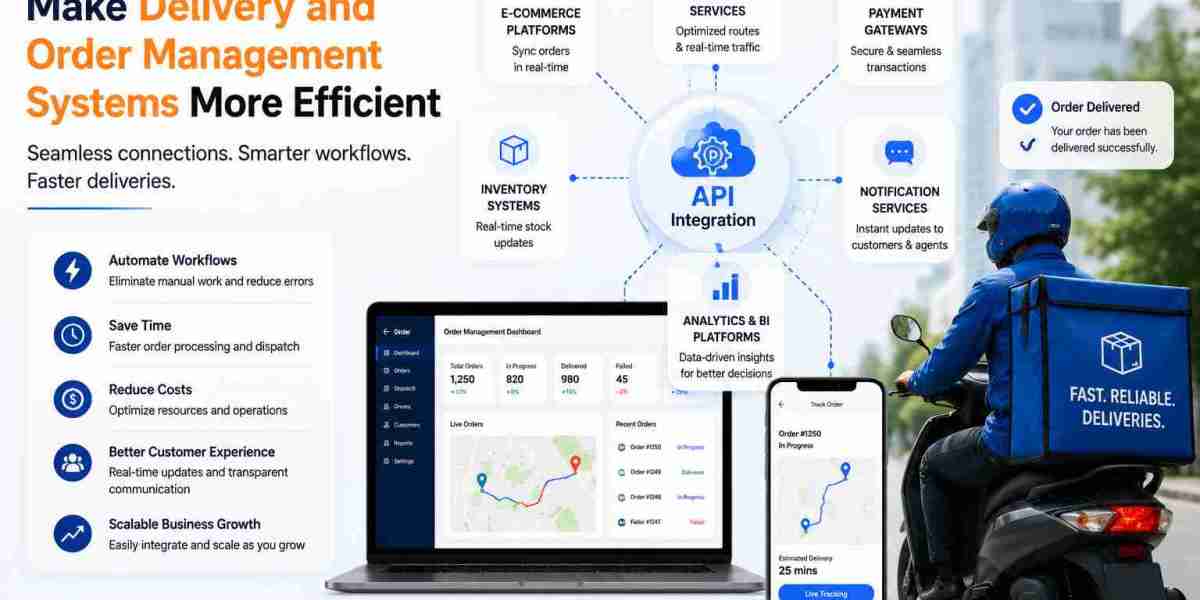

How API Integrations Make Delivery and Order Management Systems More Efficient
The modern consumer is spoiled for choice when it comes to ordering goods. As a result, companies must keep up with the demand for timely delivery and instant order status information. This is a tall order, and not only does it necessitate having professional couriers and well-organized warehouses, but it also involves advanced digital tools.
APIs can help in this regard.
Whether you own an eCommerce store, a retail network, or a delivery company, connecting your business apps can make processes much faster and more organized.
When combined with a good delivery tracking app and modern delivery management software, application programming interface (API) integration can help you to optimize operations, reduce costs, and improve customer relations.
Understanding API Integrations
An API, or application programming interface, is a messenger that allows two or more apps to communicate with each other automatically. In other words, it allows two sets of data to transfer information from one to the other.
For instance, an online shop can use APIs to automatically send an order to a delivery management system, assign the nearest courier to the delivery address, generate and send an invoice to the customer, and update the inventory with the new stock.
This removes the need for a person to do any of these tasks manually and prevents possible errors.
Integration to All Elements of the Delivery Process
There are many components to the delivery process in a company. Some of these may include:
• An eCommerce platform
• Inventory management tools
• Various apps to track, manage and optimize order delivery
• Customer relationship management (CRM) tools
• Accounting platforms
• Communication tools
• Payment providers
• A courier’s own delivery application
Without API connections, employees may waste a lot of time and energy relaying the same information from one system to another.
Connecting all of these elements to a delivery management system allows for a single unified system wherein order information is shared between all relevant parties.
Quick Processing of Orders
Speed is a crucial factor in almost all aspects of a business.
Having your sales platform integrated with your logistics tools can allow for a much higher processing rate of orders.
After an order is placed on the online store, it is automatically sent to the logistics system for dispatching with no need to enter the customer’s details manually.
This has a number of advantages, including:
• Faster confirmation of the order
• Quicker assignment of courier to get the product to the customer
• Fewer dispatching errors
• More efficient processes
As such, not only is the customer more likely to be satisfied, but the company can handle more orders because the employee’s time is used much more efficiently.
Real-Time Delivery Tracking
Most customers want to know how their package is doing at any given point during the delivery process. Having an integrated delivery tracking app makes it much easier to provide this information.
By accessing the order management system, customers can find out the delivery status at any time without having to contact the customer support team.
Instead of asking for the delivery location and having to go through any other details, they can rely on an automated process to give them the following information:
• The current location of the courier
• The expected delivery time
• Updates about the status of the delivery
• Proof of delivery
As such, a well-implemented delivery tracking app can improve customer relations and satisfaction.
Inventory Management Optimization
Inventory management tools can be very helpful. However, without proper integration between an online store and a delivery management system, it is easy to encounter errors.
For example, a customer might order a product that has already sold out because the inventory was not updated.
By integrating the online store with other delivery tools, the inventory management system can be much more efficient.
For instance, the delivery tracking app can inform the inventory management system if a product has been delivered so that the stock can be reduced accordingly. The integration can provide much better data and eliminate the possibility for human error.
As a result, businesses can avoid orders for out-of-stock items and have very satisfied customers who know what to expect.
Smarter Route Planning
The integration of delivery tracking tools can provide much better route planning than any traditional approach.
With the help of connected maps, GPS tracking tools, data analysis, and customer feedback, delivery tracking apps can suggest optimal delivery routes.
This can be more efficient for everyone in the long run as it:
• Saves fuel
• Gets deliveries to customers faster
• Helps drivers to complete more tasks per day
• Keeps drivers productive and reduces unnecessary wear and tear on the vehicles
The delivery manager can rely on the data to decide which routes to take and when to deliver the packages.
All of this can be much harder to achieve when working with isolated delivery management tools.
Superior Communication with Customers
There are several ways that customers can and do communicate with businesses. Good delivery tracking software can be very helpful in this task by allowing companies to connect with customers automatically when needed.
For instance, a business can inform the customer about the status of their delivery through SMS or email every time that the delivery tracking information is updated.
As a result, the customer receives all of the following:
• Confirmation about the order
• Information about dispatch
• Updates regarding the courier’s arrival
• Proof of delivery
When using an integrated delivery tracking app, the customer can always know what to expect from the delivery without having to contact anyone directly.
Thus, the business can provide better customer service and reduce the volume of customer support requests at the same time.
Improved Reporting and Insights
To do anything well, a business must have good data.
When using integrated delivery management tools, businesses can rely on real-time information to get the best possible insight into their operations.
This allows a manager to look at delivery data from diverse sources and use it to make better business decisions.
For example, they can look at the overall success of deliveries, the performance of couriers, and how orders and their fulfillment affect the customer experience.
Instead of getting separate reports from different systems, the leadership team can rely on one data dashboard to make better decisions.
Less Chance of Manual Error
The more a delivery management system uses automation, the fewer errors it has.
When delivery tools are not connected, the data must be entered manually, and this can lead to a number of issues, including:
• Sending the delivery to the wrong address
• Processing the same order twice
• Inability to get customer data and cancel the delivery or provide the right information
These mistakes can upset the customers and slow down the delivery process. With the use of integrated delivery tracking software, these errors can be avoided completely.
Easy Scaling Up of Operations
As a business grows, its delivery process has to change and adapt accordingly. Manually scaling up is much more difficult, especially for large-scale operations that make thousands of deliveries every day.
Modern delivery tracking tools have much better APIs that allow for fast and easy expansion of operations.
With the help of delivery tracking apps that are well-integrated into the existing tools, companies can effortlessly:
• Add new sales channels
• Increase the delivery radius
• Connect to third-party delivery management systems
• Add more warehouses to the supply chain
• Scale customer relations and satisfaction
This allows the business to grow without putting too much strain on the delivery system.
The Future of Logistics Will Only Depend on Connected Tools
The world of logistics and delivery management is constantly evolving. Advanced technology, such as artificial intelligence, data analytics, the Internet of Things, and automation are all connected.
APIs allow for these technologies to combine and create a synergy that can improve operations.
Any company that wants to stay ahead of customers’ growing demands and provide better logistics services must consider connected tools and use APIs to integrate delivery management systems.
Conclusion
An efficient delivery process is the cornerstone of most businesses that deal in goods.
API integration can be used to remove barriers in the delivery process and provide better organization and optimization. Combined with a delivery tracking app and great delivery management software, businesses can see significant benefits in their delivery operations.
As the demand for faster delivery and more information about ongoing orders increases, companies that use APIs to connect delivery tools can reduce costs and provide superior customer experiences.








