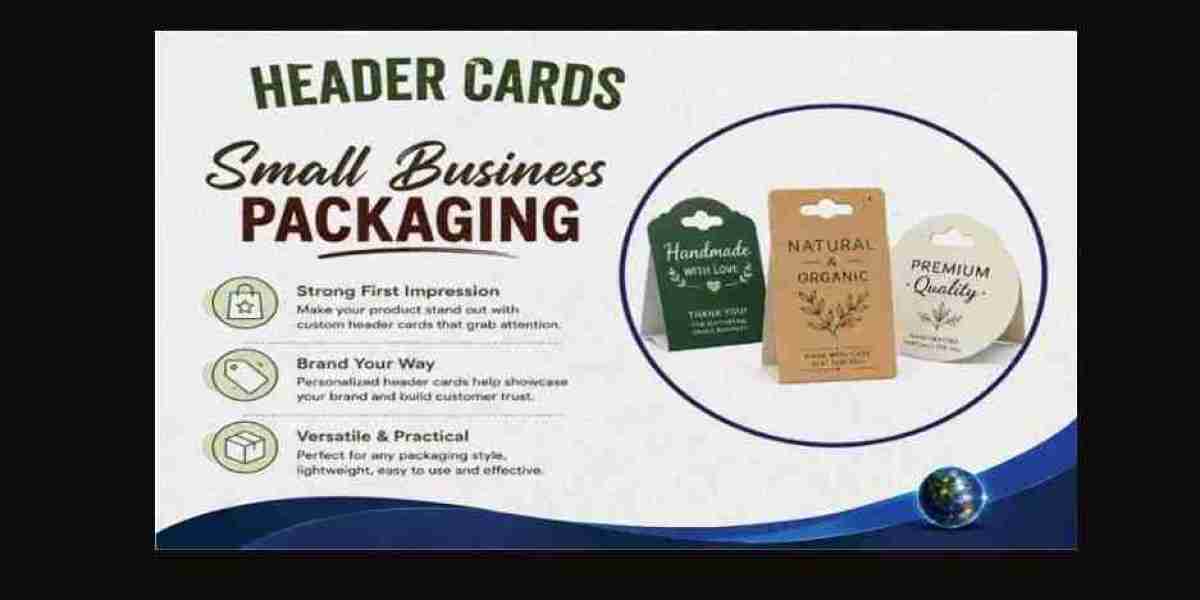

Small business packaging is often given less attention than the product itself, yet purchase decisions are often influenced by how a product is presented on a store shelf. Header cards are used by many small businesses as a low-cost way through which a simple bag is turned into shelf-ready packaging. In this content, header cards are explained from the ground up, and materials, design, printing, and the regulations followed in Canada are all covered. Easy language is used throughout, so the information is understood by anyone new to retail display packaging, without confusion caused by technical terms.
What Are Header Cards in Packaging?
A header card is described as a small paperboard piece that is attached to the top of a bag, pouch, or blister packaging. A hole is usually punched into the card, known as euro hole packaging, so the product is hung on a peg hook display in retail stores. Header cards are widely used across hanging retail packaging because a large amount of shelf space is not required, and multiple items are displayed in a single row. Clamshell packaging and hanging pouches are also paired with header cards in many small stores.
Types Of Header Cards For Products
Different types of header cards are chosen by small businesses, depending on the product and the way it is displayed.
Fold-over cards: the card is folded over the top of the bag and sealed with a staple.
Hang tab cards: die-cut hang tabs are attached separately to a pouch, offering a lighter option.
Wrap-around cards: the entire top of the packaging is wrapped for extra strength.
Best Materials Used For Header Cards
Material selection for header cards is based on durability, cost, and the type of product involved. Cardstock between 12pt and 16pt is commonly selected for standard cards, while kraft paper packaging is chosen when a natural, eco-friendly packaging look is wanted, often for organic or handmade goods. A glossy or matte coated finish is applied for a premium presentation of the product, and recyclable material is increasingly selected by small businesses to meet the needs of the brand for sustainability.
Right Size Selection For Header Cards
Header card size is selected according to the size of the product and the standard peg hook spacing used by most retail stores. Compact cards are used for small items such as jewellery, standard sizes around three to five inches are used for cosmetics or snack pouches, and wider wrap-around cards are used for bulkier items. The euro slot hole is placed at a standard position, so compatibility with hook systems across most stores is maintained.
Design Tips For Effective Header Cards
The way a product is noticed in a store is directly affected by the design decisions made for a header card. Bold colours and clear fonts are chosen so the card is noticed from a distance, and the logo is placed at the top for quick recognition of the brand. Personalized designs are increasingly requested by small business owners, since a personalized header card is remembered more easily by shoppers than a plain, generic one, and a QR code is often added for customers wanting more information.
Affordable Printing Options For Header Cards
Printing methods for header cards are selected based on budget and order quantity. Digital printing is chosen for small quantities at a lower cost, while screen printing is used for bulk orders where a durable, high-quality finish is needed. UV printing is chosen for a glossy, vibrant look on cardstock, often for premium or personalized cards. Templates are often used by small businesses instead of a fully custom design, so printing costs are kept low overall.
How Header Cards Improve Retail Packaging?
Retail packaging is improved through header cards in several ways. Shelf appeal is increased when colour, typography, and clear product details are placed on the card, and the visibility of the product is improved as a result. Good use of vertical wall space is also made through this format, which is valued by small retail stores where floor space is limited. A well-designed header card, therefore, is treated as a small but important part of a custom-printed packaging strategy. Learn more about How Header Cards Improve Retail Packaging and discover practical packaging solutions designed for better presentation of product and retail visibility.
Canada Packaging Regulations And Certifications
Packaging regulations followed in Canada are based mainly on the Consumer Packaging and Labelling Act and the Consumer Packaging and Labelling Regulations (CRC, c. 417). These regulations are enforced by the Competition Bureau of Canada, and food-related packaging is additionally inspected by the Canadian Food Inspection Agency (CFIA).
Bilingual labelling: both English and French text are required on packaging sold in Canada.
Net quantity rules: under section 19(2) of the Regulations, an exemption from metric declaration is granted for certain bulk-packaged, non-food products.
Nutrition symbol rule: effective January 1, 2026, a standardized nutrition symbol is required by Health Canada on packaged food high in saturated fat, sugar, or sodium.
Environmental certification: documentation such as FSC certification and ASTM D6400 for compostable material is requested from suppliers.
Conculsion
Header cards are presented throughout this content as a small yet valuable part of small business packaging. From material selection and design considerations to printing methods and Canadian regulations, several factors are reviewed before a final header card is selected. Costs are managed effectively when suitable templates are considered, while Custom Packaging For Small Companies is supported through practical header card solutions. Compliance requirements are maintained through careful attention to Canadian labelling regulations. For small businesses, the presentation of products is influenced by details such as a well-designed header card, making this packaging decision an important consideration for retail success.
FAQs
What is a header card used for?
A header card is used to attach a bag or pouch onto a peg hook display in a retail store. Space is also given for the logo and product details to be printed for shoppers.
Which material is best for a header card?
Cardstock between 12pt and 16pt is generally selected, since a good balance between cost and durability is offered by this range. Kraft stock is chosen when a natural look is wanted.
Are header cards allowed under Canadian packaging regulations?
Yes, header cards are permitted under the Consumer Packaging and Labelling Regulations (CRC, c. 417), as long as bilingual labelling is followed. Food products are further reviewed under CFIA and Health Canada rules.
What printing method is recommended for header cards?
Digital printing is recommended for small orders, while screen and UV printing are recommended for bulk orders or a more premium finish. The choice mainly depends on budget and quantity.
How is the correct header card size decided?
Header card size is decided based on the size of the product and standard peg hook spacing. Smaller items are paired with compact cards, while larger items need a wider card.