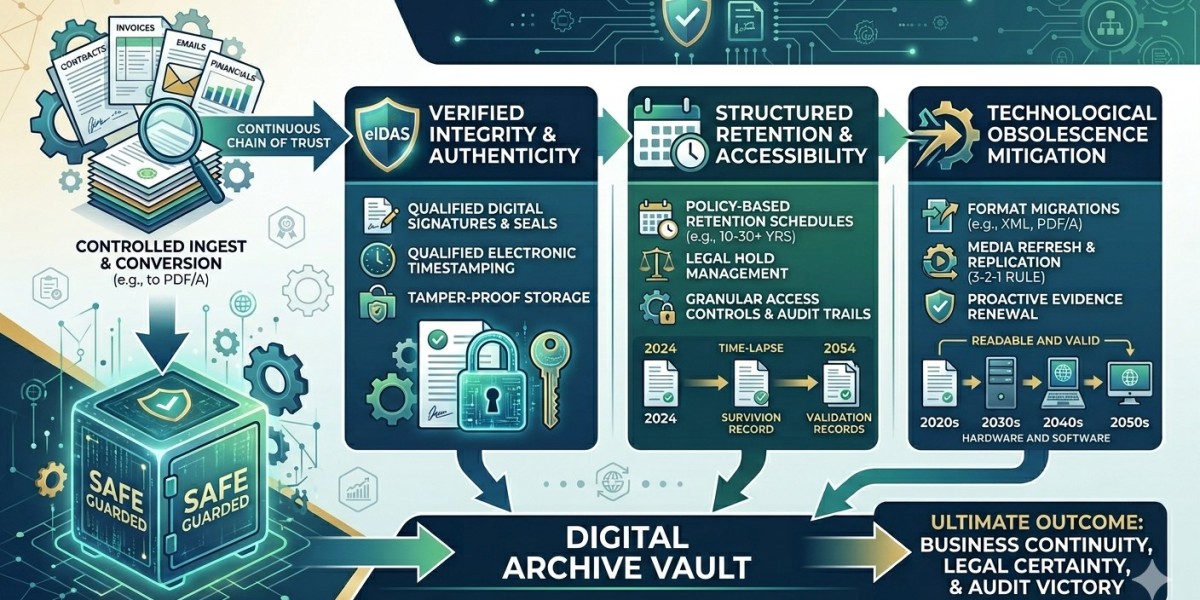

What Is Digital Archiving is a question more businesses are asking as paper files, emails, contracts, invoices, reports, and customer records continue to pile up across different systems. In simple terms, digital archiving is the process of storing important business information in a secure, organized, and searchable digital format so it can be accessed when needed. It is not just about scanning paper and saving PDFs. It is about protecting business memory, improving access, reducing risk, and making sure valuable records do not disappear inside inboxes, cabinets, shared drives, or outdated software.
The need for better archiving is growing quickly. IDC projected that the global datasphere would reach 163 zettabytes by 2025, showing how fast digital information is expanding. At the same time, IBM reported that the global average cost of a data breach reached 4.44 million dollars in 2025. These numbers make one thing clear: businesses are creating more data than ever, and poor control over that data can become expensive.
Why Digital Archiving Matters
Every company depends on information. A sales team needs contracts. Finance needs invoices. HR needs employee records. Legal teams need signed agreements. Operations teams need reports, forms, and approval histories. When these records are hard to find, daily work slows down.
This is where digital archiving becomes useful. It gives businesses a structured way to store information so teams are not wasting time digging through folders or asking, “Who has the latest version?” That small question can quietly drain hours from a workweek.
McKinsey has reported that better knowledge sharing and information access can improve productivity among knowledge workers by 20 to 25 percent. That matters because information delays do not always look dramatic. They show up as slow approvals, repeated work, missed deadlines, confused teams, and poor customer service.
A strong digital archive helps fix this by keeping important records in one reliable place. Instead of relying on memory, manual folders, or old email chains, employees can search, retrieve and use records with more confidence.
How Digital Archiving Works
To understand What Is Digital Archiving, it helps to look at how the process works in a real business setting. Imagine a company with years of supplier contracts, customer files, invoices, compliance documents, and internal policies. Some files are stored in cabinets. Some are saved on employee desktops. Some are attached to emails. Some are buried inside old systems.
A digital archiving process brings those records into a more controlled environment. Paper documents may be scanned. Digital files may be imported. Metadata can be added so records are easier to search. Access rules can be applied so only the right people can view sensitive information. Retention policies can be used to decide how long records should be kept.
For example, a finance department can retrieve old invoices during an audit without searching through years of folders. A legal team can find a signed contract quickly during a dispute. A healthcare organization can protect patient-related files with stronger controls. A government agency can preserve public records for long-term access.
Good digital archiving also supports version control. This is important because businesses often struggle with duplicate files. One employee may save a document as “final,” another saves “final updated,” and someone else creates “final latest approved.” It sounds funny until the wrong file gets used in a serious decision. Digital archiving reduces that chaos by creating a more reliable record structure.
The Business Benefits of Digital Archiving
The biggest benefit of digital archiving is control. Businesses gain control over where records live, who can access them, how long they are kept, and how quickly they can be found.
Security is another major advantage. Sensitive files should not sit unprotected in personal drives or inboxes. A proper archive can support permissions, tracking, encryption, and audit trails. These features help reduce the risk of unauthorized access and accidental loss.
Digital archiving also helps with compliance. Many industries must keep records for specific time periods. Finance, insurance, healthcare, legal services, education, and government organizations all deal with strict documentation requirements. If records are missing, incomplete, or difficult to verify, the business may face penalties, delays, or legal exposure.
Cost savings are also part of the picture. Physical storage takes space. Manual document handling takes labor. Searching for records takes time. Losing records can create even bigger costs. While digital archiving does require planning, it often creates long-term efficiency by reducing paper dependency and improving access.
There is also a customer experience benefit. When employees can find information faster, they can respond faster. A customer asking for a document, update, proof, or service history does not want to wait while a team searches old folders. Better archiving helps businesses look more professional and dependable.
Conclusion
So, What Is Digital Archiving really about? It is about more than storing files. It is about keeping business information safe, searchable, organized, and useful over time. As companies create more data and face greater security, compliance, and productivity challenges, digital archiving becomes less of a technical upgrade and more of a business necessity.
A good archive helps teams work faster, protects important records, supports compliance, and reduces the risk of losing valuable information. It turns scattered documents into structured business assets.
For any business still relying on paper cabinets, messy shared drives, or old email threads, now is the time to rethink record management. Digital archiving gives businesses a smarter way to protect their information today and keep it ready for the future.






