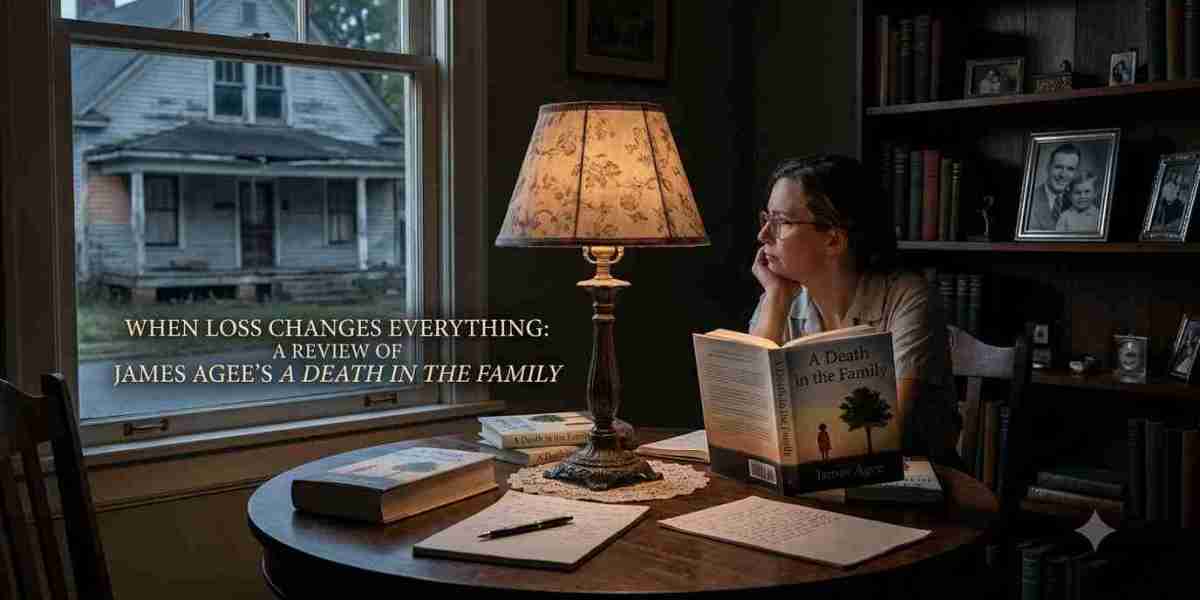

James Agee’s A Death in the Family feels like this kind of deeply moving autobiographical novel, where sudden loss isn’t just “sad” and then over; it’s more like the emotional mess that keeps showing up after. The whole thing happens in Knoxville in 1915, and it kinda leans on Agee’s own early childhood memory, losing his father in a car crash.
However, instead of death being presented like a simple tragic moment, Agee keeps looking at how a whole household tries to make sense of it, and then live with the aftermath. If you are interested in knowing more about this phenomenal work, then the A Death in the Family review that we are giving here will tell you about it.
A Story Of Sudden Loss
The book mainly follows Jay Follet, who leaves the house after hearing that his father is seriously sick. Even though his dad seems, briefly, like he’ll get better, Jay ends up dying in a car accident on the way back home. That unexpected end completely rewires an ordinary family, turning it into people who are stuck in shock, in disbelief, and in grief all at once.
The wreck itself isn’t the whole story, not even close. Agee is more concerned with the moments around it, and the way each person in the family reacts. The writing travels through the time leading up to the tragedy, then what happens right after, and finally the funeral, so you can feel the loss becoming real bit by bit, like a door you didn’t know was there.
The Child’s Point of View
One of the novel’s biggest strengths is how it portrays Rufus, the young boy who echoes Agee himself. Rufus has trouble grasping death, because his way of understanding the world is still growing and shifting. His confusion makes sense in a way adults sometimes forget: children can’t simply be given an explanation that makes everything tidy.
Through Rufus, Agee shows the collapse of childhood innocence. Death just breaks into the security of everyday family life, and suddenly the child is facing something unfamiliar and honestly frightening, in a way that doesn’t feel controllable.
Death and Human Emotion
Agee treats grief in a way that feels tangled and realistic. The characters don’t grieve in one clean pattern, not at all. Their feelings keep overlapping, shock beside numbness, and then these sharp bursts of questions that never quite settle, or do. The novel also shows how survivors are affected, as they try to reconstruct the final moments of the dead person’s life.
The Reality of Childhood Grief
The portrayal of Rufus gives the novel an additional emotional dimension. Children often experience grief differently from adults because they may not fully understand permanence or the meaning of death.
Rufus’s attempts to make sense of what has happened demonstrate how children can move between confusion, curiosity, fear, and sadness. Agee does not make these emotions overly sentimental. Instead, he allows the child's perspective to remain uncertain and imperfect, which makes it feel authentic.
Why the Novel Remains Powerful
What makes A Death in the Family memorable is its honesty. Agee does not rely solely on dramatic descriptions of tragedy. Instead, he focuses on ordinary people trying to continue living after something extraordinary and painful has happened.
The historical setting adds another layer to the story, but the emotions remain universal. Loss, family attachment, childhood innocence, memory, and grief are experiences that readers can recognize regardless of the period in which the story takes place.
Final Thoughts
A Death in the Family is ultimately a powerful examination of what happens to ordinary life after an unexpected death. James Agee transforms a deeply personal experience into a story about family, childhood, memory, and the complicated nature of grief.
Readers looking for a quiet but emotionally profound novel may find the book especially rewarding. Its strength lies not simply in the tragedy itself, but in the small human moments that follow it—the questions, memories, silences, and attempts to understand what can never truly be undone.
For more detailed book reviews, literary discussions, and recommendations, explore totalread.net.